{"variants":[{"id":47311584723287,"name":null,"title":"None \/ Black \/ Frame Only","option1":"None","option2":"Black","option3":"Frame Only","available":true,"inventory_policy":"continue","inventory_quantity":13,"limited_pre_order":false,"negative_stock_count":null,"price":332900,"compare_at_price":442900,"_karla_estimated_ship_date_start":null,"_karla_estimated_ship_date_end":null,"_container_id":null},{"id":47311584887127,"name":null,"title":"None \/ White \/ Frame Only","option1":"None","option2":"White","option3":"Frame Only","available":true,"inventory_policy":"continue","inventory_quantity":140,"limited_pre_order":false,"negative_stock_count":null,"price":332900,"compare_at_price":442900,"_karla_estimated_ship_date_start":null,"_karla_estimated_ship_date_end":null,"_container_id":null},{"id":50541195592023,"name":null,"title":"None \/ Grey \/ Frame Only","option1":"None","option2":"Grey","option3":"Frame Only","available":true,"inventory_policy":"continue","inventory_quantity":17,"limited_pre_order":false,"negative_stock_count":null,"price":332900,"compare_at_price":442900,"_karla_estimated_ship_date_start":null,"_karla_estimated_ship_date_end":null,"_container_id":null},{"id":40677505171499,"name":null,"title":"Black \/ Black \/ 120 x 60 cm","option1":"Black","option2":"Black","option3":"120 x 60 cm","available":true,"inventory_policy":"continue","inventory_quantity":13,"limited_pre_order":false,"negative_stock_count":null,"price":440900,"compare_at_price":573900,"_karla_estimated_ship_date_start":null,"_karla_estimated_ship_date_end":null,"_container_id":null},{"id":40265028468779,"name":null,"title":"Black \/ Black \/ 140 x 70 cm","option1":"Black","option2":"Black","option3":"140 x 70 cm","available":true,"inventory_policy":"continue","inventory_quantity":13,"limited_pre_order":false,"negative_stock_count":null,"price":535900,"compare_at_price":690900,"_karla_estimated_ship_date_start":null,"_karla_estimated_ship_date_end":null,"_container_id":null},{"id":40265028501547,"name":null,"title":"Black \/ Black \/ 160 x 80 cm","option1":"Black","option2":"Black","option3":"160 x 80 cm","available":true,"inventory_policy":"continue","inventory_quantity":13,"limited_pre_order":false,"negative_stock_count":null,"price":569900,"compare_at_price":746900,"_karla_estimated_ship_date_start":null,"_karla_estimated_ship_date_end":null,"_container_id":null},{"id":47245598064983,"name":null,"title":"Black \/ Black \/ 180 x 80 cm","option1":"Black","option2":"Black","option3":"180 x 80 cm","available":true,"inventory_policy":"continue","inventory_quantity":13,"limited_pre_order":false,"negative_stock_count":null,"price":624900,"compare_at_price":812900,"_karla_estimated_ship_date_start":null,"_karla_estimated_ship_date_end":null,"_container_id":null},{"id":50541195690327,"name":null,"title":"Black \/ Black \/ 200 x 80 cm","option1":"Black","option2":"Black","option3":"200 x 80 cm","available":true,"inventory_policy":"continue","inventory_quantity":13,"limited_pre_order":false,"negative_stock_count":null,"price":639900,"compare_at_price":838900,"_karla_estimated_ship_date_start":null,"_karla_estimated_ship_date_end":null,"_container_id":null},{"id":40677505204267,"name":null,"title":"Black \/ White \/ 120 x 60 cm","option1":"Black","option2":"White","option3":"120 x 60 cm","available":true,"inventory_policy":"continue","inventory_quantity":93,"limited_pre_order":false,"negative_stock_count":null,"price":440900,"compare_at_price":573900,"_karla_estimated_ship_date_start":null,"_karla_estimated_ship_date_end":null,"_container_id":null},{"id":40265028534315,"name":null,"title":"Black \/ White \/ 140 x 70 cm","option1":"Black","option2":"White","option3":"140 x 70 cm","available":true,"inventory_policy":"continue","inventory_quantity":140,"limited_pre_order":false,"negative_stock_count":null,"price":535900,"compare_at_price":690900,"_karla_estimated_ship_date_start":null,"_karla_estimated_ship_date_end":null,"_container_id":null},{"id":40265028567083,"name":null,"title":"Black \/ White \/ 160 x 80 cm","option1":"Black","option2":"White","option3":"160 x 80 cm","available":true,"inventory_policy":"continue","inventory_quantity":118,"limited_pre_order":false,"negative_stock_count":null,"price":569900,"compare_at_price":746900,"_karla_estimated_ship_date_start":null,"_karla_estimated_ship_date_end":null,"_container_id":"ler25019-c2"},{"id":47245598097751,"name":null,"title":"Black \/ White \/ 180 x 80 cm","option1":"Black","option2":"White","option3":"180 x 80 cm","available":true,"inventory_policy":"continue","inventory_quantity":106,"limited_pre_order":false,"negative_stock_count":null,"price":624900,"compare_at_price":812900,"_karla_estimated_ship_date_start":null,"_karla_estimated_ship_date_end":null,"_container_id":null},{"id":50541195723095,"name":null,"title":"Black \/ White \/ 200 x 80 cm","option1":"Black","option2":"White","option3":"200 x 80 cm","available":true,"inventory_policy":"continue","inventory_quantity":49,"limited_pre_order":false,"negative_stock_count":null,"price":639900,"compare_at_price":838900,"_karla_estimated_ship_date_start":null,"_karla_estimated_ship_date_end":null,"_container_id":null},{"id":50541195755863,"name":null,"title":"Black \/ Grey \/ 120 x 60 cm","option1":"Black","option2":"Grey","option3":"120 x 60 cm","available":true,"inventory_policy":"continue","inventory_quantity":17,"limited_pre_order":false,"negative_stock_count":null,"price":440900,"compare_at_price":573900,"_karla_estimated_ship_date_start":null,"_karla_estimated_ship_date_end":null,"_container_id":null},{"id":50541195854167,"name":null,"title":"Black \/ Grey \/ 140 x 70 cm","option1":"Black","option2":"Grey","option3":"140 x 70 cm","available":true,"inventory_policy":"continue","inventory_quantity":17,"limited_pre_order":false,"negative_stock_count":null,"price":535900,"compare_at_price":690900,"_karla_estimated_ship_date_start":null,"_karla_estimated_ship_date_end":null,"_container_id":null},{"id":50541195886935,"name":null,"title":"Black \/ Grey \/ 160 x 80 cm","option1":"Black","option2":"Grey","option3":"160 x 80 cm","available":true,"inventory_policy":"continue","inventory_quantity":17,"limited_pre_order":false,"negative_stock_count":null,"price":569900,"compare_at_price":746900,"_karla_estimated_ship_date_start":null,"_karla_estimated_ship_date_end":null,"_container_id":null},{"id":50541195919703,"name":null,"title":"Black \/ Grey \/ 180 x 80 cm","option1":"Black","option2":"Grey","option3":"180 x 80 cm","available":true,"inventory_policy":"continue","inventory_quantity":17,"limited_pre_order":false,"negative_stock_count":null,"price":624900,"compare_at_price":812900,"_karla_estimated_ship_date_start":null,"_karla_estimated_ship_date_end":null,"_container_id":null},{"id":50541195952471,"name":null,"title":"Black \/ Grey \/ 200 x 80 cm","option1":"Black","option2":"Grey","option3":"200 x 80 cm","available":true,"inventory_policy":"continue","inventory_quantity":17,"limited_pre_order":false,"negative_stock_count":null,"price":639900,"compare_at_price":838900,"_karla_estimated_ship_date_start":null,"_karla_estimated_ship_date_end":null,"_container_id":"ler25019-c2"},{"id":40677505302571,"name":null,"title":"Walnut \/ Black \/ 120 x 60 cm","option1":"Walnut","option2":"Black","option3":"120 x 60 cm","available":true,"inventory_policy":"continue","inventory_quantity":-1,"limited_pre_order":false,"negative_stock_count":null,"price":440900,"compare_at_price":573900,"_karla_estimated_ship_date_start":null,"_karla_estimated_ship_date_end":null,"_container_id":null},{"id":40265028763691,"name":null,"title":"Walnut \/ Black \/ 140 x 70 cm","option1":"Walnut","option2":"Black","option3":"140 x 70 cm","available":true,"inventory_policy":"continue","inventory_quantity":13,"limited_pre_order":false,"negative_stock_count":null,"price":535900,"compare_at_price":690900,"_karla_estimated_ship_date_start":null,"_karla_estimated_ship_date_end":null,"_container_id":null},{"id":40583409401899,"name":null,"title":"Walnut \/ Black \/ 160 x 80 cm","option1":"Walnut","option2":"Black","option3":"160 x 80 cm","available":true,"inventory_policy":"continue","inventory_quantity":13,"limited_pre_order":false,"negative_stock_count":null,"price":569900,"compare_at_price":746900,"_karla_estimated_ship_date_start":null,"_karla_estimated_ship_date_end":null,"_container_id":null},{"id":47245598130519,"name":null,"title":"Walnut \/ Black \/ 180 x 80 cm","option1":"Walnut","option2":"Black","option3":"180 x 80 cm","available":true,"inventory_policy":"continue","inventory_quantity":13,"limited_pre_order":false,"negative_stock_count":null,"price":624900,"compare_at_price":812900,"_karla_estimated_ship_date_start":null,"_karla_estimated_ship_date_end":null,"_container_id":"ler25019-c2"},{"id":50541195985239,"name":null,"title":"Walnut \/ Black \/ 200 x 80 cm","option1":"Walnut","option2":"Black","option3":"200 x 80 cm","available":true,"inventory_policy":"continue","inventory_quantity":13,"limited_pre_order":false,"negative_stock_count":null,"price":639900,"compare_at_price":838900,"_karla_estimated_ship_date_start":null,"_karla_estimated_ship_date_end":null,"_container_id":null},{"id":40677505335339,"name":null,"title":"Walnut \/ White \/ 120 x 60 cm","option1":"Walnut","option2":"White","option3":"120 x 60 cm","available":true,"inventory_policy":"continue","inventory_quantity":-1,"limited_pre_order":false,"negative_stock_count":null,"price":440900,"compare_at_price":573900,"_karla_estimated_ship_date_start":null,"_karla_estimated_ship_date_end":null,"_container_id":null},{"id":40265028829227,"name":null,"title":"Walnut \/ White \/ 140 x 70 cm","option1":"Walnut","option2":"White","option3":"140 x 70 cm","available":true,"inventory_policy":"continue","inventory_quantity":115,"limited_pre_order":false,"negative_stock_count":null,"price":535900,"compare_at_price":690900,"_karla_estimated_ship_date_start":null,"_karla_estimated_ship_date_end":null,"_container_id":null},{"id":40583410122795,"name":null,"title":"Walnut \/ White \/ 160 x 80 cm","option1":"Walnut","option2":"White","option3":"160 x 80 cm","available":true,"inventory_policy":"continue","inventory_quantity":47,"limited_pre_order":false,"negative_stock_count":null,"price":569900,"compare_at_price":746900,"_karla_estimated_ship_date_start":null,"_karla_estimated_ship_date_end":null,"_container_id":null},{"id":47245598163287,"name":null,"title":"Walnut \/ White \/ 180 x 80 cm","option1":"Walnut","option2":"White","option3":"180 x 80 cm","available":true,"inventory_policy":"continue","inventory_quantity":56,"limited_pre_order":false,"negative_stock_count":null,"price":624900,"compare_at_price":812900,"_karla_estimated_ship_date_start":null,"_karla_estimated_ship_date_end":null,"_container_id":"ler25019-c2"},{"id":50541196018007,"name":null,"title":"Walnut \/ White \/ 200 x 80 cm","option1":"Walnut","option2":"White","option3":"200 x 80 cm","available":true,"inventory_policy":"continue","inventory_quantity":37,"limited_pre_order":false,"negative_stock_count":null,"price":639900,"compare_at_price":838900,"_karla_estimated_ship_date_start":null,"_karla_estimated_ship_date_end":null,"_container_id":null},{"id":50541196050775,"name":null,"title":"Walnut \/ Grey \/ 120 x 60 cm","option1":"Walnut","option2":"Grey","option3":"120 x 60 cm","available":true,"inventory_policy":"continue","inventory_quantity":-1,"limited_pre_order":false,"negative_stock_count":null,"price":440900,"compare_at_price":573900,"_karla_estimated_ship_date_start":null,"_karla_estimated_ship_date_end":null,"_container_id":null},{"id":50541196149079,"name":null,"title":"Walnut \/ Grey \/ 140 x 70 cm","option1":"Walnut","option2":"Grey","option3":"140 x 70 cm","available":true,"inventory_policy":"continue","inventory_quantity":17,"limited_pre_order":false,"negative_stock_count":null,"price":535900,"compare_at_price":690900,"_karla_estimated_ship_date_start":null,"_karla_estimated_ship_date_end":null,"_container_id":null},{"id":50541196181847,"name":null,"title":"Walnut \/ Grey \/ 160 x 80 cm","option1":"Walnut","option2":"Grey","option3":"160 x 80 cm","available":true,"inventory_policy":"continue","inventory_quantity":17,"limited_pre_order":false,"negative_stock_count":null,"price":569900,"compare_at_price":746900,"_karla_estimated_ship_date_start":null,"_karla_estimated_ship_date_end":null,"_container_id":null},{"id":50541196214615,"name":null,"title":"Walnut \/ Grey \/ 180 x 80 cm","option1":"Walnut","option2":"Grey","option3":"180 x 80 cm","available":true,"inventory_policy":"continue","inventory_quantity":17,"limited_pre_order":false,"negative_stock_count":null,"price":624900,"compare_at_price":812900,"_karla_estimated_ship_date_start":null,"_karla_estimated_ship_date_end":null,"_container_id":"ler25019-c2"},{"id":50541196312919,"name":null,"title":"Walnut \/ Grey \/ 200 x 80 cm","option1":"Walnut","option2":"Grey","option3":"200 x 80 cm","available":true,"inventory_policy":"continue","inventory_quantity":17,"limited_pre_order":false,"negative_stock_count":null,"price":639900,"compare_at_price":838900,"_karla_estimated_ship_date_start":null,"_karla_estimated_ship_date_end":null,"_container_id":null},{"id":40677505237035,"name":null,"title":"White \/ Black \/ 120 x 60 cm","option1":"White","option2":"Black","option3":"120 x 60 cm","available":true,"inventory_policy":"continue","inventory_quantity":8,"limited_pre_order":false,"negative_stock_count":null,"price":440900,"compare_at_price":573900,"_karla_estimated_ship_date_start":null,"_karla_estimated_ship_date_end":null,"_container_id":null},{"id":40265028599851,"name":null,"title":"White \/ Black \/ 140 x 70 cm","option1":"White","option2":"Black","option3":"140 x 70 cm","available":true,"inventory_policy":"continue","inventory_quantity":13,"limited_pre_order":false,"negative_stock_count":null,"price":535900,"compare_at_price":690900,"_karla_estimated_ship_date_start":null,"_karla_estimated_ship_date_end":null,"_container_id":null},{"id":40265028632619,"name":null,"title":"White \/ Black \/ 160 x 80 cm","option1":"White","option2":"Black","option3":"160 x 80 cm","available":true,"inventory_policy":"continue","inventory_quantity":12,"limited_pre_order":false,"negative_stock_count":null,"price":569900,"compare_at_price":746900,"_karla_estimated_ship_date_start":null,"_karla_estimated_ship_date_end":null,"_container_id":null},{"id":47245598196055,"name":null,"title":"White \/ Black \/ 180 x 80 cm","option1":"White","option2":"Black","option3":"180 x 80 cm","available":true,"inventory_policy":"continue","inventory_quantity":13,"limited_pre_order":false,"negative_stock_count":null,"price":624900,"compare_at_price":812900,"_karla_estimated_ship_date_start":null,"_karla_estimated_ship_date_end":null,"_container_id":null},{"id":50541196345687,"name":null,"title":"White \/ Black \/ 200 x 80 cm","option1":"White","option2":"Black","option3":"200 x 80 cm","available":true,"inventory_policy":"continue","inventory_quantity":13,"limited_pre_order":false,"negative_stock_count":null,"price":639900,"compare_at_price":838900,"_karla_estimated_ship_date_start":null,"_karla_estimated_ship_date_end":null,"_container_id":null},{"id":40677505269803,"name":null,"title":"White \/ White \/ 120 x 60 cm","option1":"White","option2":"White","option3":"120 x 60 cm","available":true,"inventory_policy":"continue","inventory_quantity":8,"limited_pre_order":false,"negative_stock_count":null,"price":440900,"compare_at_price":573900,"_karla_estimated_ship_date_start":null,"_karla_estimated_ship_date_end":null,"_container_id":null},{"id":40265028665387,"name":null,"title":"White \/ White \/ 140 x 70 cm","option1":"White","option2":"White","option3":"140 x 70 cm","available":true,"inventory_policy":"continue","inventory_quantity":60,"limited_pre_order":false,"negative_stock_count":null,"price":535900,"compare_at_price":690900,"_karla_estimated_ship_date_start":null,"_karla_estimated_ship_date_end":null,"_container_id":null},{"id":40265028730923,"name":null,"title":"White \/ White \/ 160 x 80 cm","option1":"White","option2":"White","option3":"160 x 80 cm","available":true,"inventory_policy":"continue","inventory_quantity":12,"limited_pre_order":false,"negative_stock_count":null,"price":569900,"compare_at_price":746900,"_karla_estimated_ship_date_start":null,"_karla_estimated_ship_date_end":null,"_container_id":null},{"id":47245598228823,"name":null,"title":"White \/ White \/ 180 x 80 cm","option1":"White","option2":"White","option3":"180 x 80 cm","available":true,"inventory_policy":"continue","inventory_quantity":88,"limited_pre_order":false,"negative_stock_count":null,"price":624900,"compare_at_price":812900,"_karla_estimated_ship_date_start":null,"_karla_estimated_ship_date_end":null,"_container_id":null},{"id":50541196378455,"name":null,"title":"White \/ White \/ 200 x 80 cm","option1":"White","option2":"White","option3":"200 x 80 cm","available":true,"inventory_policy":"continue","inventory_quantity":42,"limited_pre_order":false,"negative_stock_count":null,"price":639900,"compare_at_price":838900,"_karla_estimated_ship_date_start":null,"_karla_estimated_ship_date_end":null,"_container_id":null},{"id":50541196411223,"name":null,"title":"White \/ Grey \/ 120 x 60 cm","option1":"White","option2":"Grey","option3":"120 x 60 cm","available":true,"inventory_policy":"continue","inventory_quantity":8,"limited_pre_order":false,"negative_stock_count":null,"price":440900,"compare_at_price":573900,"_karla_estimated_ship_date_start":null,"_karla_estimated_ship_date_end":null,"_container_id":null},{"id":50541196443991,"name":null,"title":"White \/ Grey \/ 140 x 70 cm","option1":"White","option2":"Grey","option3":"140 x 70 cm","available":true,"inventory_policy":"continue","inventory_quantity":17,"limited_pre_order":false,"negative_stock_count":null,"price":535900,"compare_at_price":690900,"_karla_estimated_ship_date_start":null,"_karla_estimated_ship_date_end":null,"_container_id":null},{"id":50541196476759,"name":null,"title":"White \/ Grey \/ 160 x 80 cm","option1":"White","option2":"Grey","option3":"160 x 80 cm","available":true,"inventory_policy":"continue","inventory_quantity":12,"limited_pre_order":false,"negative_stock_count":null,"price":569900,"compare_at_price":746900,"_karla_estimated_ship_date_start":null,"_karla_estimated_ship_date_end":null,"_container_id":"ler25019-c2"},{"id":50541196509527,"name":null,"title":"White \/ Grey \/ 180 x 80 cm","option1":"White","option2":"Grey","option3":"180 x 80 cm","available":true,"inventory_policy":"continue","inventory_quantity":17,"limited_pre_order":false,"negative_stock_count":null,"price":624900,"compare_at_price":812900,"_karla_estimated_ship_date_start":null,"_karla_estimated_ship_date_end":null,"_container_id":null},{"id":50541196542295,"name":null,"title":"White \/ Grey \/ 200 x 80 cm","option1":"White","option2":"Grey","option3":"200 x 80 cm","available":true,"inventory_policy":"continue","inventory_quantity":17,"limited_pre_order":false,"negative_stock_count":null,"price":639900,"compare_at_price":838900,"_karla_estimated_ship_date_start":null,"_karla_estimated_ship_date_end":null,"_container_id":null}]}
{"variants":[{"id":47311370420567,"name":null,"title":"None \/ Black \/ Frame Only","option1":"None","option2":"Black","option3":"Frame Only","available":true,"inventory_policy":"continue","inventory_quantity":-25,"limited_pre_order":false,"negative_stock_count":null,"price":255900,"compare_at_price":343900,"_karla_estimated_ship_date_start":null,"_karla_estimated_ship_date_end":null,"_container_id":null},{"id":50541119537495,"name":null,"title":"None \/ White \/ Frame Only","option1":"None","option2":"White","option3":"Frame Only","available":true,"inventory_policy":"continue","inventory_quantity":3,"limited_pre_order":false,"negative_stock_count":null,"price":255900,"compare_at_price":343900,"_karla_estimated_ship_date_start":null,"_karla_estimated_ship_date_end":null,"_container_id":null},{"id":50541119570263,"name":null,"title":"None \/ Grey \/ Frame Only","option1":"None","option2":"Grey","option3":"Frame Only","available":true,"inventory_policy":"continue","inventory_quantity":43,"limited_pre_order":false,"negative_stock_count":null,"price":255900,"compare_at_price":343900,"_karla_estimated_ship_date_start":null,"_karla_estimated_ship_date_end":null,"_container_id":null},{"id":50541119603031,"name":null,"title":"Black \/ Black \/ 120 x 60 cm","option1":"Black","option2":"Black","option3":"120 x 60 cm","available":true,"inventory_policy":"continue","inventory_quantity":-25,"limited_pre_order":false,"negative_stock_count":null,"price":363900,"compare_at_price":473900,"_karla_estimated_ship_date_start":null,"_karla_estimated_ship_date_end":null,"_container_id":null},{"id":50541119635799,"name":null,"title":"Black \/ Black \/ 140 x 70 cm","option1":"Black","option2":"Black","option3":"140 x 70 cm","available":true,"inventory_policy":"continue","inventory_quantity":-25,"limited_pre_order":false,"negative_stock_count":null,"price":458900,"compare_at_price":568900,"_karla_estimated_ship_date_start":null,"_karla_estimated_ship_date_end":null,"_container_id":null},{"id":50541119668567,"name":null,"title":"Black \/ Black \/ 160 x 80 cm","option1":"Black","option2":"Black","option3":"160 x 80 cm","available":true,"inventory_policy":"continue","inventory_quantity":-25,"limited_pre_order":false,"negative_stock_count":null,"price":492900,"compare_at_price":602900,"_karla_estimated_ship_date_start":null,"_karla_estimated_ship_date_end":null,"_container_id":null},{"id":52162633171287,"name":null,"title":"Black \/ Black \/ 180 x 80 cm","option1":"Black","option2":"Black","option3":"180 x 80 cm","available":true,"inventory_policy":"continue","inventory_quantity":-25,"limited_pre_order":false,"negative_stock_count":null,"price":547900,"compare_at_price":658900,"_karla_estimated_ship_date_start":null,"_karla_estimated_ship_date_end":null,"_container_id":null},{"id":50541119701335,"name":null,"title":"Black \/ White \/ 120 x 60 cm","option1":"Black","option2":"White","option3":"120 x 60 cm","available":true,"inventory_policy":"continue","inventory_quantity":3,"limited_pre_order":false,"negative_stock_count":null,"price":363900,"compare_at_price":473900,"_karla_estimated_ship_date_start":null,"_karla_estimated_ship_date_end":null,"_container_id":null},{"id":50541119734103,"name":null,"title":"Black \/ White \/ 140 x 70 cm","option1":"Black","option2":"White","option3":"140 x 70 cm","available":true,"inventory_policy":"continue","inventory_quantity":3,"limited_pre_order":false,"negative_stock_count":null,"price":458900,"compare_at_price":568900,"_karla_estimated_ship_date_start":null,"_karla_estimated_ship_date_end":null,"_container_id":null},{"id":50541119766871,"name":null,"title":"Black \/ White \/ 160 x 80 cm","option1":"Black","option2":"White","option3":"160 x 80 cm","available":true,"inventory_policy":"continue","inventory_quantity":3,"limited_pre_order":false,"negative_stock_count":null,"price":492900,"compare_at_price":602900,"_karla_estimated_ship_date_start":null,"_karla_estimated_ship_date_end":null,"_container_id":null},{"id":52162633204055,"name":null,"title":"Black \/ White \/ 180 x 80 cm","option1":"Black","option2":"White","option3":"180 x 80 cm","available":true,"inventory_policy":"continue","inventory_quantity":3,"limited_pre_order":false,"negative_stock_count":null,"price":547900,"compare_at_price":658900,"_karla_estimated_ship_date_start":null,"_karla_estimated_ship_date_end":null,"_container_id":null},{"id":50541119799639,"name":null,"title":"Black \/ Grey \/ 120 x 60 cm","option1":"Black","option2":"Grey","option3":"120 x 60 cm","available":true,"inventory_policy":"continue","inventory_quantity":43,"limited_pre_order":false,"negative_stock_count":null,"price":363900,"compare_at_price":473900,"_karla_estimated_ship_date_start":null,"_karla_estimated_ship_date_end":null,"_container_id":null},{"id":50541119832407,"name":null,"title":"Black \/ Grey \/ 140 x 70 cm","option1":"Black","option2":"Grey","option3":"140 x 70 cm","available":true,"inventory_policy":"continue","inventory_quantity":43,"limited_pre_order":false,"negative_stock_count":null,"price":458900,"compare_at_price":568900,"_karla_estimated_ship_date_start":null,"_karla_estimated_ship_date_end":null,"_container_id":null},{"id":50541119865175,"name":null,"title":"Black \/ Grey \/ 160 x 80 cm","option1":"Black","option2":"Grey","option3":"160 x 80 cm","available":true,"inventory_policy":"continue","inventory_quantity":43,"limited_pre_order":false,"negative_stock_count":null,"price":492900,"compare_at_price":602900,"_karla_estimated_ship_date_start":null,"_karla_estimated_ship_date_end":null,"_container_id":null},{"id":52162633236823,"name":null,"title":"Black \/ Grey \/ 180 x 80 cm","option1":"Black","option2":"Grey","option3":"180 x 80 cm","available":true,"inventory_policy":"continue","inventory_quantity":43,"limited_pre_order":false,"negative_stock_count":null,"price":547900,"compare_at_price":658900,"_karla_estimated_ship_date_start":null,"_karla_estimated_ship_date_end":null,"_container_id":null},{"id":50541119897943,"name":null,"title":"White \/ Black \/ 120 x 60 cm","option1":"White","option2":"Black","option3":"120 x 60 cm","available":true,"inventory_policy":"continue","inventory_quantity":-25,"limited_pre_order":false,"negative_stock_count":null,"price":363900,"compare_at_price":473900,"_karla_estimated_ship_date_start":null,"_karla_estimated_ship_date_end":null,"_container_id":null},{"id":50541119930711,"name":null,"title":"White \/ Black \/ 140 x 70 cm","option1":"White","option2":"Black","option3":"140 x 70 cm","available":true,"inventory_policy":"continue","inventory_quantity":-25,"limited_pre_order":false,"negative_stock_count":null,"price":458900,"compare_at_price":568900,"_karla_estimated_ship_date_start":null,"_karla_estimated_ship_date_end":null,"_container_id":null},{"id":50541119963479,"name":null,"title":"White \/ Black \/ 160 x 80 cm","option1":"White","option2":"Black","option3":"160 x 80 cm","available":true,"inventory_policy":"continue","inventory_quantity":-25,"limited_pre_order":false,"negative_stock_count":null,"price":492900,"compare_at_price":602900,"_karla_estimated_ship_date_start":null,"_karla_estimated_ship_date_end":null,"_container_id":null},{"id":52162633269591,"name":null,"title":"White \/ Black \/ 180 x 80 cm","option1":"White","option2":"Black","option3":"180 x 80 cm","available":true,"inventory_policy":"continue","inventory_quantity":-25,"limited_pre_order":false,"negative_stock_count":null,"price":547900,"compare_at_price":658900,"_karla_estimated_ship_date_start":null,"_karla_estimated_ship_date_end":null,"_container_id":null},{"id":50541119996247,"name":null,"title":"White \/ White \/ 120 x 60 cm","option1":"White","option2":"White","option3":"120 x 60 cm","available":true,"inventory_policy":"continue","inventory_quantity":3,"limited_pre_order":false,"negative_stock_count":null,"price":363900,"compare_at_price":473900,"_karla_estimated_ship_date_start":null,"_karla_estimated_ship_date_end":null,"_container_id":null},{"id":50541120029015,"name":null,"title":"White \/ White \/ 140 x 70 cm","option1":"White","option2":"White","option3":"140 x 70 cm","available":true,"inventory_policy":"continue","inventory_quantity":3,"limited_pre_order":false,"negative_stock_count":null,"price":458900,"compare_at_price":568900,"_karla_estimated_ship_date_start":null,"_karla_estimated_ship_date_end":null,"_container_id":null},{"id":50541120061783,"name":null,"title":"White \/ White \/ 160 x 80 cm","option1":"White","option2":"White","option3":"160 x 80 cm","available":true,"inventory_policy":"continue","inventory_quantity":3,"limited_pre_order":false,"negative_stock_count":null,"price":492900,"compare_at_price":602900,"_karla_estimated_ship_date_start":null,"_karla_estimated_ship_date_end":null,"_container_id":null},{"id":52162633302359,"name":null,"title":"White \/ White \/ 180 x 80 cm","option1":"White","option2":"White","option3":"180 x 80 cm","available":true,"inventory_policy":"continue","inventory_quantity":3,"limited_pre_order":false,"negative_stock_count":null,"price":547900,"compare_at_price":658900,"_karla_estimated_ship_date_start":null,"_karla_estimated_ship_date_end":null,"_container_id":null},{"id":50541120094551,"name":null,"title":"White \/ Grey \/ 120 x 60 cm","option1":"White","option2":"Grey","option3":"120 x 60 cm","available":true,"inventory_policy":"continue","inventory_quantity":8,"limited_pre_order":false,"negative_stock_count":null,"price":363900,"compare_at_price":473900,"_karla_estimated_ship_date_start":null,"_karla_estimated_ship_date_end":null,"_container_id":null},{"id":50541120127319,"name":null,"title":"White \/ Grey \/ 140 x 70 cm","option1":"White","option2":"Grey","option3":"140 x 70 cm","available":true,"inventory_policy":"continue","inventory_quantity":43,"limited_pre_order":false,"negative_stock_count":null,"price":458900,"compare_at_price":568900,"_karla_estimated_ship_date_start":null,"_karla_estimated_ship_date_end":null,"_container_id":null},{"id":50541120160087,"name":null,"title":"White \/ Grey \/ 160 x 80 cm","option1":"White","option2":"Grey","option3":"160 x 80 cm","available":true,"inventory_policy":"continue","inventory_quantity":12,"limited_pre_order":false,"negative_stock_count":null,"price":492900,"compare_at_price":602900,"_karla_estimated_ship_date_start":null,"_karla_estimated_ship_date_end":null,"_container_id":"ler25019-c2"},{"id":52162633335127,"name":null,"title":"White \/ Grey \/ 180 x 80 cm","option1":"White","option2":"Grey","option3":"180 x 80 cm","available":true,"inventory_policy":"continue","inventory_quantity":43,"limited_pre_order":false,"negative_stock_count":null,"price":547900,"compare_at_price":658900,"_karla_estimated_ship_date_start":null,"_karla_estimated_ship_date_end":null,"_container_id":null},{"id":50541120192855,"name":null,"title":"Walnut \/ Black \/ 120 x 60 cm","option1":"Walnut","option2":"Black","option3":"120 x 60 cm","available":true,"inventory_policy":"continue","inventory_quantity":-25,"limited_pre_order":false,"negative_stock_count":null,"price":363900,"compare_at_price":473900,"_karla_estimated_ship_date_start":null,"_karla_estimated_ship_date_end":null,"_container_id":null},{"id":50541120225623,"name":null,"title":"Walnut \/ Black \/ 140 x 70 cm","option1":"Walnut","option2":"Black","option3":"140 x 70 cm","available":true,"inventory_policy":"continue","inventory_quantity":-25,"limited_pre_order":false,"negative_stock_count":null,"price":458900,"compare_at_price":568900,"_karla_estimated_ship_date_start":null,"_karla_estimated_ship_date_end":null,"_container_id":null},{"id":50541120258391,"name":null,"title":"Walnut \/ Black \/ 160 x 80 cm","option1":"Walnut","option2":"Black","option3":"160 x 80 cm","available":true,"inventory_policy":"continue","inventory_quantity":-25,"limited_pre_order":false,"negative_stock_count":null,"price":492900,"compare_at_price":602900,"_karla_estimated_ship_date_start":null,"_karla_estimated_ship_date_end":null,"_container_id":null},{"id":52162633367895,"name":null,"title":"Walnut \/ Black \/ 180 x 80 cm","option1":"Walnut","option2":"Black","option3":"180 x 80 cm","available":true,"inventory_policy":"continue","inventory_quantity":-25,"limited_pre_order":false,"negative_stock_count":null,"price":547900,"compare_at_price":658900,"_karla_estimated_ship_date_start":null,"_karla_estimated_ship_date_end":null,"_container_id":"25019-c2"},{"id":50541120291159,"name":null,"title":"Walnut \/ White \/ 120 x 60 cm","option1":"Walnut","option2":"White","option3":"120 x 60 cm","available":true,"inventory_policy":"continue","inventory_quantity":-1,"limited_pre_order":false,"negative_stock_count":null,"price":363900,"compare_at_price":473900,"_karla_estimated_ship_date_start":null,"_karla_estimated_ship_date_end":null,"_container_id":null},{"id":50541120323927,"name":null,"title":"Walnut \/ White \/ 140 x 70 cm","option1":"Walnut","option2":"White","option3":"140 x 70 cm","available":true,"inventory_policy":"continue","inventory_quantity":3,"limited_pre_order":false,"negative_stock_count":null,"price":458900,"compare_at_price":568900,"_karla_estimated_ship_date_start":null,"_karla_estimated_ship_date_end":null,"_container_id":null},{"id":50541120356695,"name":null,"title":"Walnut \/ White \/ 160 x 80 cm","option1":"Walnut","option2":"White","option3":"160 x 80 cm","available":true,"inventory_policy":"continue","inventory_quantity":3,"limited_pre_order":false,"negative_stock_count":null,"price":492900,"compare_at_price":602900,"_karla_estimated_ship_date_start":null,"_karla_estimated_ship_date_end":null,"_container_id":null},{"id":52162633400663,"name":null,"title":"Walnut \/ White \/ 180 x 80 cm","option1":"Walnut","option2":"White","option3":"180 x 80 cm","available":true,"inventory_policy":"continue","inventory_quantity":3,"limited_pre_order":false,"negative_stock_count":null,"price":547900,"compare_at_price":658900,"_karla_estimated_ship_date_start":null,"_karla_estimated_ship_date_end":null,"_container_id":"learn25019-c2"},{"id":50541120389463,"name":null,"title":"Walnut \/ Grey \/ 120 x 60 cm","option1":"Walnut","option2":"Grey","option3":"120 x 60 cm","available":true,"inventory_policy":"continue","inventory_quantity":-1,"limited_pre_order":false,"negative_stock_count":null,"price":363900,"compare_at_price":473900,"_karla_estimated_ship_date_start":null,"_karla_estimated_ship_date_end":null,"_container_id":null},{"id":50541120422231,"name":null,"title":"Walnut \/ Grey \/ 140 x 70 cm","option1":"Walnut","option2":"Grey","option3":"140 x 70 cm","available":true,"inventory_policy":"continue","inventory_quantity":43,"limited_pre_order":false,"negative_stock_count":null,"price":458900,"compare_at_price":568900,"_karla_estimated_ship_date_start":null,"_karla_estimated_ship_date_end":null,"_container_id":null},{"id":50541120454999,"name":null,"title":"Walnut \/ Grey \/ 160 x 80 cm","option1":"Walnut","option2":"Grey","option3":"160 x 80 cm","available":true,"inventory_policy":"continue","inventory_quantity":43,"limited_pre_order":false,"negative_stock_count":null,"price":492900,"compare_at_price":602900,"_karla_estimated_ship_date_start":null,"_karla_estimated_ship_date_end":null,"_container_id":null},{"id":52162633433431,"name":null,"title":"Walnut \/ Grey \/ 180 x 80 cm","option1":"Walnut","option2":"Grey","option3":"180 x 80 cm","available":true,"inventory_policy":"continue","inventory_quantity":43,"limited_pre_order":false,"negative_stock_count":null,"price":547900,"compare_at_price":658900,"_karla_estimated_ship_date_start":null,"_karla_estimated_ship_date_end":null,"_container_id":"ler25019-c2"}]}
Electric Balance Board: The Guide for Your Office 2026
You have a height-adjustable desk. You regularly switch between sitting and standing. Yet you notice: Even standing can become static.
This is often where the search for an electric balance board comes in. Not out of athletic ambition. But because you want more movement in your daily work without losing focus.
An electric balance board can be useful. But not for everyone, not for every office, and not for every workstation. The crucial factor is whether the technology truly helps you in everyday life or if a simple manual board or standing mat is the better choice.
More than just standing: The next step for your home office
You might recognize this: In the morning, you raise your desk, work standing, and initially feel more awake. After a while, however, your feet, calves, or lower back get tired. You are standing, but you are hardly moving.
Then something typical happens. You fall back into rigid postures. Sometimes you lean to one side, sometimes you lock your knees, sometimes you are already moving back to your chair.
Why static standing is often not enough
Ergonomics doesn't end with switching from sitting to standing. The next step is active standing. This doesn't mean a training session. It's about small weight shifts, gentle balancing movements, and more variety for your legs and core.
A balance board can bring exactly this dynamism into everyday life. In German-speaking countries, the balance board has long been established not only in sports but is also used for training, therapy, and everyday applications. The historical development is clearly traceable: The modern balance board became commercially viable in 1953 with the patent by Stanley Washburn Jr. and is now also seen as a tool for movement in the home office, as the article on the history and use of the balance board categorizes it.
The practical difference in everyday work
The benefit lies not in spectacular movements. It lies in small impulses.
Instead of standing motionless in front of the monitor, you move slightly with it. This can feel like:
When reading: You slowly shift your weight from left to right.
In video calls: You stay in motion without walking around the room.
For cognitive tasks: The slight activity helps some people avoid falling into a rigid posture.
A good setup doesn't force you to move. It makes movement easier.
If you only know classic wobble boards or mats, it's worth looking at the difference between board types at a desk. The Deskspace article on the balance board at the desk is relevant here.
An electric model addresses precisely where manual solutions are too passive for some and too unstable for others.
What is an electric balance board
An electric balance board is not a normal wobble board with a battery. And it's not just a hoverboard for indoors. The core difference lies in its active technology.
The simple distinction
A manual board only reacts to your weight and the shape of its underside. You move it. Period.
An electric board also has internal technology that detects and compensates for movements. Typically, such devices on the German market use two separate hub motors. Models with 2x300 W to 2x400 W, powered by 36 V batteries, are common. Depending on the model, range and load capacity are in areas known from the hoverboard segment. A good technical classification can be found in the product data for electric balance boards with 36 V and 2x300 W to 2x400 W.
How to imagine the technology
The simplest analogy is this: A manual board is like a loose plank on a movable surface. An electric board is more like a platform that reacts to your weight shifts and actively assists.
Inside, several components work together:
Sensors: They detect how you shift your weight.
Motors: They implement these impulses in a controlled manner.
Battery: It powers the system.
Control system: It ensures that movements are guided rather than abrupt.
This makes it easier for some people to use. Especially if a classic wobble board feels too "nervous" (unstable).
Practical rule: The calmer and more controlled a board moves, the better it suits concentrated screen work.
Where the idea originally comes from
Balance boards are not a new invention from the smart office sector. The commercial spread of modern balance boards began in 1953, when Stanley Washburn Jr. filed a patent in the USA. This marked the transition from improvised precursors to a marketed training product, which in Germany today ranges from recreational sports to therapy and workplace ergonomics. The historical classification can be found in the German Wikipedia entry on balance boards.
For office use, however, it is important: Not every electric platform with a balance function is automatically suitable for a desk. What is crucial is how finely it reacts to small movements and how calmly it can be used in a work context.
Benefits for health and productivity in the office
In the office, it's not about balancing as intricately as possible. It's about making long work phases less static.
This is particularly relevant because in Germany in 2024, approximately 24% of employees worked at least occasionally from home, as cited by the Federal Statistical Office in a related context. This figure primarily shows one thing: ergonomics must now also function in small spaces. You can find more information on this in the note on home office share and space-saving ergonomic solutions.
What micro-movements change in everyday life
An electric balance board can encourage small movements while standing, without you consciously training. That's its appeal.
Typical effects in everyday work include:
Less rigid posture: You don't stand unchanged for minutes.
More core activation: The body constantly stabilizes itself.
More variety for legs and feet: This can make monotonous standing more comfortable.
Better transition between focus and movement: You stay at your workstation and still move slightly.
These points are not a miracle solution. But they fit well with office work because they happen incidentally.
Why this can also affect concentration
Many people experience the afternoon slump not just as a lack of energy, but as a posture problem. Those who sit for a long time or stand stiffly often become restless or slump.
An electric balance board can help here because it gives your body small tasks that don't require much attention. This can be particularly useful for monotonous tasks, such as reading, reviewing, or during longer calls.
A second thought also fits here: A tidy workspace reduces friction. If this topic interests you, the article on productivity through Clean Desk is worthwhile. A calm setup and controlled movement go well together.
Movement in the office doesn't have to be visibly strenuous to be useful.
Where the limit lies
An electric board is no substitute for walks, breaks, or strength training. And it's not equally useful in every work situation.
It is often particularly suitable for:
Video calls without constant typing
Conceptual work and reading
Short standing phases between sitting blocks
Workstations with little space for more movement
It is usually less suitable for tasks that require maximum fine motor skills or continuously absolute stillness in the lower body.
The perfect combination with a height-adjustable desk
An electric balance board only works well at a desk if the desk provides a stable base. This is often underestimated.
If the desktop wobbles, the monitor swings, or the height is not properly adjusted, a useful addition can quickly become a disruptive setup.
Rethinking height
As soon as you stand on a board, your working position changes. Your desk must therefore be set higher than when normally standing on the floor.
Pay attention to these points:
Shoulders remain relaxed.
Forearms rest in a natural position.
Wrists do not bend upwards.
Your gaze meets the screen without neck strain.
If you don't adjust the table, you compensate with your shoulders and neck. Then the board loses its ergonomic purpose.
Stability is more important than gimmicks
With an active standing setup, you don't need spectacular features. You need predictability.
What matters is:
Stable frame: The board introduces movement into your stance. The table should not amplify this movement.
Precise height adjustment: You need to be able to quickly compensate for the additional standing height.
Anti-collision protection: This is helpful when adjusting the height and there are cables, containers, or other objects nearby.
Enough space under the table: The board needs clear space for you to get on and off safely.
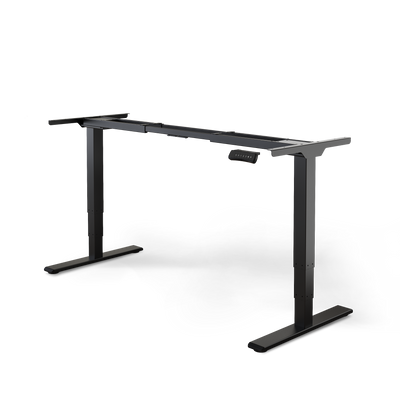
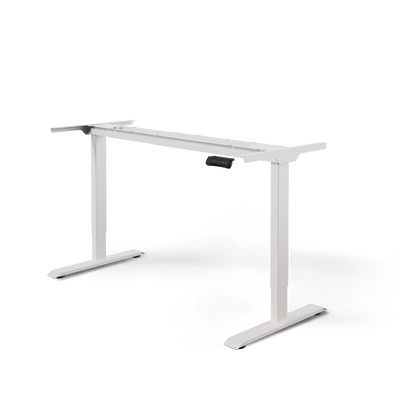
An example of such a system concept is an electrically height-adjustable desk like those from DESKSPACE, if you value stable height adjustment and safety features. The brand is less important than whether the table remains stable during active standing.
If the table and board don't match, you'll end up not using either consistently.
Important buying criteria for your electric board
You're at your desk, opening the first spreadsheet of the day, and after ten minutes you realize: An electric board can make standing more active. But it can also make it more restless, louder, and more disruptive to your workflow. That's precisely why you should buy differently for the office than for leisure or fun rides.
As already mentioned, many models in this segment work with similar basic data. For everyday office use, however, these figures are only the starting point. What is crucial is how the board feels in actual use: predictable underfoot, quiet in the room, and suitable for your tasks.
What really matters for everyday work
An electric balance board in the office is not a fitness device for peak performance. It's more like a finely tuned movement stimulus. If the coordination is right, you remain in light activity without constant interruptions to typing, reading, or calls.
You should pay particular attention to:
Smooth control instead of aggressive reaction: A board for the workplace should implement small weight shifts in a controlled manner. Overly "nervous" models feel spectacular but disrupt concentrated screen work.
Sufficient load capacity with reserve: Don't just factor in your body weight, but also shoes and clothing. A small safety buffer ensures a calmer feeling and less operation at the limit.
Practical charging: In a home office, a complicated charging process can quickly become annoying. Make sure charging fits easily into your daily routine and that the board doesn't constantly need to be plugged in.
Secure standing surface: The surface should be grippy, even if you wear smooth-soled shoes. Surfaces that are too small or too smooth turn slight movement into unnecessary uncertainty.
Noise level: A quiet board is hardly noticeable in the room. This is often more important than additional features for video calls, concentrated work, and shared workspaces.
Understandable safety information: Clear manufacturer information on protective functions, indoor use, and care helps more than long feature lists.
Checklist for buying an electric balance board
Criterion
What to look for
Recommendation for the office
Board reaction
Smooth, easily controllable movements
Rather quiet and predictable than particularly dynamic
Load capacity
Enough reserve for your actual user weight
Do not plan at the upper limit
Battery and charging
Everyday charging process, reasonable runtime
Uncomplicated recharging is more important than high range specifications
Standing surface
Grip, size, firm stand
Prefer non-slip, everyday surface
Noise level
Motor, signal tones, general operating volume
As quiet as possible for home office and shared office
Who the surcharge from manual to electric is worthwhile for
The difference is quickly explained in everyday life. A manual board provides movement through your own weight shift. An electric model adds an active component. This can be pleasant if you otherwise stand very statically and want a small movement impulse without constantly having to adjust yourself.
The surcharge is especially worthwhile for people who work standing for long periods, tend to stand rigidly, and tend to forget movement rather than overdo it. It is less useful if you are primarily looking for a stable, simple base or if you frequently type with high concentration and perceive any additional movement as a disturbance. In that case, a manual board or targeted movement breaks with simple exercises at the workplace are often the more suitable solution.
These questions clarify the purchase decision
Before buying, answer a few very practical questions:
Do you want more activation or primarily more comfort while standing?
Do you work a lot in video calls or in a quiet environment?
Can you tolerate slight continuous movement even when using a mouse and keyboard?
Do you have enough clear space to safely get on and off?
Do you use the board daily or only for short periods?
If you hesitate on several points, that's not an argument against more movement. It's just an indication of a more suitable tool. In the office, it's usually not the most technically exciting model that wins, but the one you use regularly and safely without detours.
Safe Use and Effective Exercises in the Office
The biggest hurdle is usually not the technology. It's getting started. Many get on too quickly, adjust the desk incorrectly, or test the board immediately during a demanding task.
In the office, the rule is: safe, quiet, and controlled. Precisely these points are often overlooked in many guides, although for Germany, aspects such as noise level, load capacity, and certifications are important in the work environment. You can find a qualitative classification on this in the note on safety aspects for office use.
How to Get on Safely
Start by following a fixed sequence:
Place the board on a firm surface. No soft carpet edge, no uneven surface.
Use a desk or stable edge for support.
Place one foot in the middle.
Shift your weight slowly.
Bring your second foot over calmly.
Only then release your hands from the support.
Don't try your first attempts parallel to a video conference. You first want to get a feel for the reaction and balance.
Initially, only work on tasks that do not require high typing speed or strong mouse precision when on the board.
Subtle Movements for Work Mode
You don't need a workout routine like in a gym. In the office, small patterns are enough:
Gentle shifting left and right: Good for reading or thinking.
Slight back-and-forth movement: Useful during short standing phases.
Static holding for a few minutes: More for focused screen work.
Consciously relieving one leg and switching: Helps against stiff standing.
In the office, some things are simply impractical:
Quick changes of direction
Simultaneous getting on and typing
Use on slippery or inclined floors
Long sessions without getting used to it
Using it for every task on principle
An electric board should support your work. As soon as it consumes attention, the intensity is too high or the timing is wrong.
Maintenance, Troubleshooting, and Useful Alternatives
An electric board remains practical for everyday use only if you can easily maintain it. In the office, this mainly means: keeping it clean, charging it properly, and recognizing small malfunctions early.
Effortless Maintenance
This basic care is often sufficient:
Wipe the surface regularly: Dust and abrasion can make the standing surface uncomfortable.
Check the roller area and underside: Dirt or small foreign objects interfere with the movement.
Don't completely ignore the battery: Charge the device so it remains ready for use and doesn't sit empty for weeks.
Store dry: Moisture is not good for electronics or grip surfaces.
When Something Is Not Running Smoothly
Typical everyday problems are rarely spectacular. Usually, it's these points:
The board reacts erratically. Check the surface and restart its use.
It feels crooked. Check if it is standing straight and if the surface is even.
Its use interferes with work. Reduce the duration or only use it during specific task blocks.
The noise is annoying. Then the model may not be suitable for your space.
Useful Alternatives Without Electricity
Not everyone needs an electric model. There are simple alternatives with a different character:
Manual wobble board: Good for active short standing phases. More direct, but often also more unstable.
Standing mat: Very low threshold. Little getting used to, but fewer movement impulses.
Alternating foot changes on the floor: The simplest solution. Free, but without guided dynamics.
The right choice is not the one with the most features. The right choice is the one you actually use regularly.
If you want to improve your entire setup, you can find information on height-adjustable desks, ergonomic accessories, and practical guides for healthy working in the home office and office at DESKSPACE.