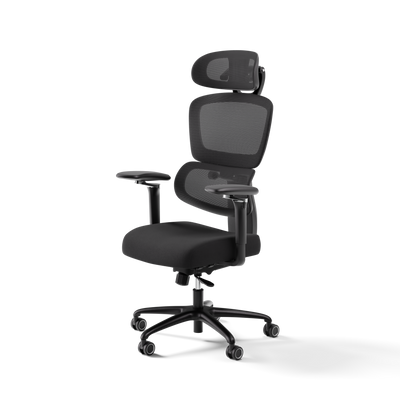
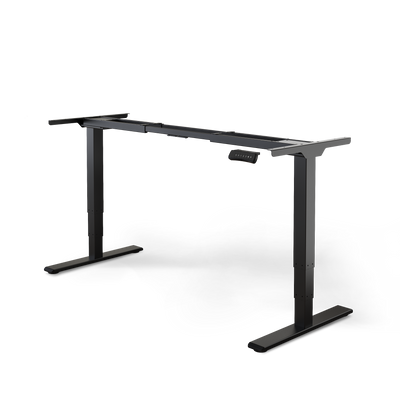
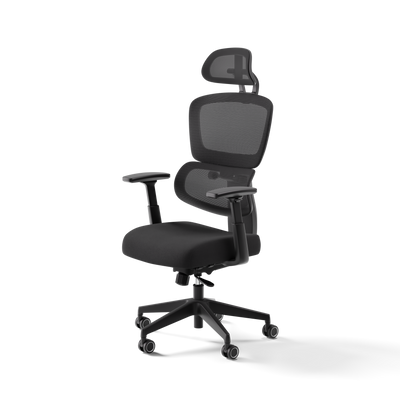
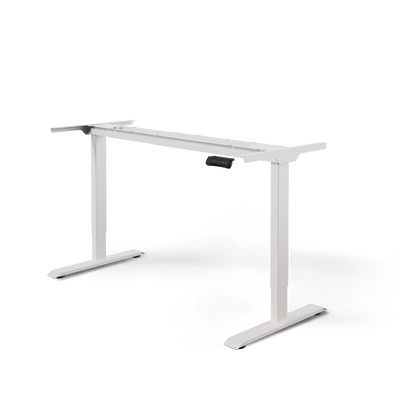


Electrically height-adjustable desk legs for your setup

Electrically height-adjustable table legs are the basis for a dynamic workplace. They allow switching between sitting and standing at the push of a button. The system is a quiet and precise lifting system for your tabletop.
What are electrically height-adjustable table legs?
They are the technical foundation for an ergonomic desk. They allow for a smooth transition between sitting and standing working postures.
A complete system, often called a desk frame, consists of several components that guarantee smooth and stable movement.
The core components of a system
The heart of an electrically height-adjustable frame is the motors. They are usually integrated into the lifting columns, the table legs. They drive a spindle mechanism. This mechanism ensures that the leg segments move smoothly in and out of each other.
Other important components include:
- Lifting columns: These are the legs of the frame. They usually consist of two or three segments to cover a large height range.
- Control unit: This is the "brain" of the desk. It receives signals from the control element and synchronizes the motors.
- Control element: This is the keypad you use to manually adjust the height or recall saved positions.
This technology is more than a comfort feature. It is a decisive factor for your health at work. Sitting for hours puts uneven strain on the spine and muscles. Even a slight forward tilt of the head when working on a screen creates a significant load on the cervical spine.
Regular alternation between sitting and standing promotes circulation, engages different muscle groups, and can prevent tension.
A growing market for ergonomics
The demand for ergonomic workplace solutions is increasing. This topic is gaining particular focus in Europe and Germany. The market for electrically height-adjustable desk frames is growing rapidly. An analysis by Data Bridge Market Research predicts a value of 1,868.75 million US dollars for the European market by 2029. This corresponds to an annual growth rate of 7.2 percent. Germany is one of the driving core markets in this regard.
Finding the right height for you
A height-adjustable desk must be set up correctly for you to fully realize its benefits. The ideal desk height is individual and depends on your height. Only at the correct height will your arms rest at the right angle and your posture will be optimal. Incorrect adjustment can negate the ergonomic advantages.
Our article shows you how to calculate the optimal desk height for you.
The technology in detail: the decisive features
The performance and reliability of a desk frame are evident in its technical data. These figures are more than just facts. They determine the comfort, safety, and longevity of your workplace.
You need to know what matters to distinguish good models from bad ones. We explain the most important technical values. This will help you find exactly the frame that suits you and your setup.
Load capacity and lifting force: How much weight does your desk need to lift?
The load capacity, also known as lifting force, is an important criterion. It indicates how much weight the frame, including the tabletop, can safely lift and lower. A setup with multiple monitors, a PC, books, and other devices can quickly reach a high weight.
Too low a load capacity has several disadvantages. The motors operate at their limit, making them slower and louder and increasing wear. In the worst case, the stability of the desk suffers.
Here are practical guidelines:
- For the standard home office: A load capacity of 80 to 100 kg is sufficient in most cases.
- For power users and creatives: Anyone working with multiple monitors, heavy equipment, or a solid wood top should plan for at least 120 to 160 kg.
Make sure that the stated load capacity is dynamic. This means that the weight can be handled safely even during movement. The static load capacity, which the desk can withstand when stationary, is usually higher, but dynamic force is crucial in everyday use.
Lift range and lift speed: Flexibility for every body size
The lift range describes the path of the desk from its lowest to its highest position. A large lift range is important for good ergonomics, as it ensures that the desk fits both short and tall people. The lowest setting is important so that feet can rest flat on the floor when seated. The maximum height allows for an upright posture when standing.
Most high-quality frames have a range between 60 cm and 130 cm. This covers almost every body size according to ergonomic recommendations.
The lift speed (mm/s) indicates how quickly the posture changes. A fast desk makes the switch between sitting and standing easy. Good models achieve 38 mm/s or more. A desk that is too slow is disruptive in everyday life and leads to less frequent position changes.
A fast and quiet change between positions is not a luxury feature, but a prerequisite for consistent use of the ergonomic benefits. A slow or loud adjustment is used less frequently in everyday life.
Drive types and noise development: Performance and smooth operation
The drive type is the heart of your desk frame. It influences performance, stability, and noise development. There are three systems: single, dual, and triple motors.
The following table gives you a quick overview to compare the systems.
Comparison of drive types for desk frames
This table compares the characteristics of single, dual, and triple motor systems to facilitate selection.
| Feature | Single-motor system | Dual-motor system | Triple-motor system (for corner desks) |
|---|---|---|---|
| Construction | A central motor drives both legs via a shaft. | Each leg has its own synchronized motor. | Each of the three legs has its own motor. |
| Load capacity | Lower (typically up to approx. 80 kg) | Higher (often 120 kg and more) | Very high (for large, heavy tops) |
| Speed | Slower | Faster and more uniform | Fast and very stable |
| Stability | Sufficient, but more prone to issues with heavy loads | Very high, as the load is evenly distributed | Maximum stability, even with large surfaces |
| Noise level | Usually a little louder | Significantly quieter and smoother running | Quiet, despite the three motors |
| Ideal for | Simple setups, price-conscious buyers | Standard to power users who value performance | L-shaped corner desks, large work surfaces |
Dual-motor systems, as used in our DESKSPACE frames, are the established standard. They offer the best balance of power, speed, and smooth operation.
An often underestimated detail is the noise level in decibels (dB). A loud motor can be disruptive in a home office or open-plan office. High-quality frames operate below 50 dB. This corresponds to the volume of a normal conversation.
Safety features and control: Smart helpers in everyday life
Modern desk frames have smart features for safety and comfort. Collision protection is a must. Sensors in the system detect obstacles during movement, such as a chair or a rolling cabinet. The motor stops immediately and reverses a small distance to prevent damage.
The memory function offers convenience. You save your ideal sitting and standing height and can recall them at the touch of a button. There's no need to search for the perfect position. Good control elements have three to four memory slots and a digital display that shows the current height.
How dynamic working promotes health and productivity
Investing in electrically height-adjustable table legs means investing in your own health and performance. A dynamic workplace allows for easy switching between sitting and standing and has positive effects on body and mind. It's not just about comfort, but about a sustainable improvement in your well-being.

Hours of rigid sitting is an unnatural posture that puts uneven strain on the body. The consequences are often tension, poorer circulation, and quickly fatigued muscles. Regular changes in posture are key to breaking this cycle.
Less back pain through active posture
A noticeable advantage of a height-adjustable desk is the alleviation of back pain. As soon as you stand up, your spine is relieved. Your core and leg muscles are activated to stabilize the body, which also improves your posture.
This alternation prevents the overload of certain muscle groups while others atrophy. The intervertebral discs are better supplied with nutrients, and the risk of chronic complaints decreases.
This issue also has an economic dimension. Back pain causes costs of up to 55 billion euros annually in the German economy due to absenteeism and reduced productivity. Studies show that height-adjustable desks can reduce back pain by up to 40 percent.
Increased productivity and concentration
The physical benefits directly affect your mental performance. Switching to a standing position boosts circulation and improves oxygen supply to the brain.
The result: you feel more awake and can concentrate better. Instead of falling into an afternoon slump, you remain energetic and focused.
A dynamic workplace is an effective remedy against mental fatigue. The impulse of standing up acts like a small reboot for body and mind.
Changing posture also increases your overall activity throughout the day. When standing, the body burns more calories than when sitting. These small movements add up and contribute to a healthier lifestyle.
Promoting mental health
An ergonomic workplace offers more than just physical benefits. The freedom to change your working position yourself gives you a sense of control and increases your well-being. This reduces stress and increases satisfaction.
The positive effects create a work environment where you feel more comfortable and less stressed. This dynamic working behavior strengthens mental health and contributes to burnout prevention and resilience.
The most important advantages at a glance:
- Less back pain: Relief of the spine and activation of the core muscles.
- Better circulation: More oxygen for the brain and prevention of fatigue.
- Higher concentration: The afternoon slump is avoided, and focus is maintained.
- More calories burned: Your workday becomes more active.
- Mental well-being: More control over the workplace reduces stress.
The decision for electrically height-adjustable table legs is a sustainable decision for health and productivity.
Electric or mechanical? A direct comparison
Anyone considering height-adjustable table legs will ask themselves: electric or mechanical? Both serve the same purpose, but comfort, precision, and price differ significantly.
Let's compare the two options so you can find the right system for your daily work, budget, and requirements.
Electric systems: Comfort at the touch of a button
Electrically height-adjustable table legs are the most comfortable solution. A quick press of a button, and the table moves quickly, quietly, and precisely to the desired height. You don't have to interrupt your work or exert any force.
The memory function is particularly useful. You save your perfect sitting and standing height. A single button press is enough, and the frame moves to the exact position. This seamless transition motivates consistent use of the ergonomic benefits.
If switching between sitting and standing is complicated or strenuous, it is often avoided in the hectic daily routine. This means the health benefits are lost. Simplicity is key here.
Modern electric models often offer safety features such as collision protection. This immediately stops movement if there is an obstacle. This protects furniture and the table frame.
Mechanical systems: The pragmatic alternative
Mechanical table legs, usually with a hand crank, are the simpler and cheaper option. Their advantage is the lower price and independence from electricity.
However, this simplicity comes at a price. Every height adjustment requires manual effort. You have to crank, which takes time and can take you out of your workflow. The adjustment is often less precise, and there is no memory function.
For a rarely used workplace, a mechanical system may be sufficient. However, if you want to change positions several times a day, cranking quickly becomes an obstacle.
Practice in Germany
In Germany, ergonomics in the workplace is highly valued, which is why electrical systems are clearly gaining ground. Mechanical crank tables are available from 100 to 250 Euros, but require manual effort and offer no comfort functions. Electric frames start at around 300 Euros and allow for stepless adjustment, often from 65 to 128 cm, with speeds of around 38 mm/s. Features such as collision protection and a standby consumption of only 0.1 watts are standard. Therefore, around 70 percent of buyers in Germany opt for the electric version. Further insights on the topic are provided by bueromoebel-experte.de.
The decision depends on your usage:
- Daily, dynamic use: An electric system is the best choice here. Comfort and precision justify the surcharge.
- Infrequent use: If the table is only adjusted occasionally, a mechanical model can be a budget-friendly alternative.
For professional use in the office or home office, an electric frame is the superior choice.
Instructions: Selecting and assembling a tabletop
A frame for electrically height-adjustable table legs is the foundation. Only with the right tabletop does it become a complete desk. The choice of the tabletop and a clean assembly are crucial for stability and longevity.

This section guides you step-by-step through the process, from selecting the tabletop to securely attaching it to the frame.
Choosing the right tabletop
Not every tabletop fits every frame. Compatibility depends on dimensions, weight, and material. An unsuitable choice can impair stability or damage the frame.
Pay attention to these three points:
- Dimensions (width and depth): Each desk frame is designed for a specific size range. A tabletop that is too small does not provide enough support surface. A tabletop that is too large makes the desk top-heavy and unstable. Check the manufacturer's specifications for your frame.
- Tabletop thickness: A stable tabletop should be at least 2.5 cm thick. Thinner tabletops can sag under the weight of monitors and arms.
- Weight and material: The intrinsic weight of the tabletop is deducted from the total load capacity of the frame. A heavy solid wood tabletop demands more from the motors than a light chipboard. Factor this weight into your planning.
A well-chosen tabletop is a supporting element that influences the stability of your desk and ensures a safe working environment.
Especially with large tops from 180 cm width, thickness and material quality are important to prevent sagging. You can learn more about the advantages of a high-quality solid wood desk top in our guide.
Assembly of frame and tabletop
Assembling a desk frame is usually straightforward but requires care. Most manufacturers provide clear instructions and the necessary tools.
A typical setup proceeds as follows:
- Preparation: Lay out all parts clearly on the floor. A blanket protects the floor and components from scratches. Check that all screws and tools are present.
- Assemble the frame: Follow the instructions to connect the feet, lifting columns, and crossbars. Initially, only tighten the screws hand-tight.
- Adjust width: Adjust the width of the frame to the dimensions of your tabletop. Most frames are flexibly extendable.
- Tighten everything: Once the width is correct, tighten all screws on the frame. A stable frame is the basis for a wobble-free desk.
- Attach the tabletop: Place the tabletop upside down on the floor. Center the assembled frame on it and screw it securely to the tabletop.
- Cable management: Attach the control unit, control element, and motor cables to the frame or under the tabletop. Use cable ties or cable sleeves for a tidy appearance.
- Set up the desk: Carefully turn the finished desk upright. It's best to do this with two people. Plug the power cord into the outlet.
- Initialization: Perform the first reset as described in the instructions. Usually, you need to drive the desk all the way down and then a bit up again for the motors to calibrate.
Be careful not to overtighten the screws to avoid damaging the tabletop material. A cordless drill with a low torque setting is helpful.
Your checklist for buying the right desk frame
Choosing the right desk frame can be overwhelming. This checklist summarizes the most important points. It helps you compare models and make the right choice. It is your guide to avoiding a bad purchase.
With the following criteria, you ensure that your new frame matches your setup and working style.
Technical basic requirements
The technical data is crucial. It determines whether the frame can safely support your equipment and adapt to your height.
- Load capacity: Calculate the weight of your equipment, including the tabletop. A typical home office usually requires 80 to 100 kg. For a heavy setup with multiple monitors or a solid wood top, you should aim for 120 kg or more.
- Lift range: Look for a large adjustment range. It should match your optimal sitting and standing height. A good guideline is a range of about 62 cm to 128 cm.
- Motor technology: Dual-motor systems with one motor per leg offer the best combination of speed, stability, and quiet operation. They are the standard for high-quality electrically height-adjustable table legs and ensure smooth movement below 50 dB.
Comfort and safety features
Modern desk frames offer more than just height adjustment. Good models make everyday life easier with smart functions and protect your equipment.
Good collision protection is indispensable. It stops movement when encountering resistance, for example, from a chair or rolling cabinet, and reverses a short distance. This protects furniture and the frame from damage.
Also, look for easy operation with a memory function. At least three memory slots are ideal for saving your sitting and standing heights. This allows you to change posture at the touch of a button without having to readjust.
Checklist for purchasing electrically height-adjustable table legs
Use this checklist to ensure you consider all important aspects when making your purchase decision.
| Criterion | What to look for | Recommendation |
|---|---|---|
| Load capacity | Total weight of tabletop + equipment (PC, monitors, etc.) | Standard setup: 80-100 kg Heavy setup: >120 kg |
| Lift range | Suitable for your height when sitting & standing | Wide range, e.g., 62-128 cm |
| Motors | Number, speed, and noise level | Dual-motor system for stability and quiet operation (<50 dB) |
| Safety | Collision protection (gyro sensor-based is best) | Indispensable for protecting furniture and frame |
| Operation | Memory function for saved heights | At least 3-4 memory slots for easy posture change |
| Warranty | How long does the manufacturer guarantee its quality? | At least 5 years signals confidence and longevity |
| Certificates | Independent test seals like TÜV or CE | Confirm tested safety and quality |
| Reviews | Real experiences of other buyers | Provide insight into product quality and customer service |
This table will help you find a frame that will reliably serve you for many years.
Quality, Service, and Trust
The longevity of a product is often evident in the manufacturer's overall conditions. The following points are indicators of high quality.
- Warranty: A long warranty period of at least 5 years is a strong signal. It shows that the manufacturer is confident in its product.
- Certifications: Look for test seals like TÜV or CE. They confirm that the frame meets strict European safety and quality standards.
- Customer reviews: Real, independent reviews are valuable. They provide a realistic insight into product quality and customer service.
An overview of all ergonomic criteria can be found in our Ergonomics at the Workplace Checklist. This will help you prioritize the most important points for your purchase.
Frequently Asked Questions about Electrically Height-Adjustable Desk Frames
Are you considering a height-adjustable desk frame but still have questions? Here we answer the most common concerns briefly and directly.
How much electricity does a desk frame consume?
The power consumption is low. In standby mode, modern frames like those from Deskspace consume less than 0.1 watts. This is not noticeable on the electricity bill.
Only during movement does the desk require about 100 to 250 watts for a few seconds, depending on the model and load. The annual costs for this are negligible.
How loud is the adjustment?
The loudness is a quality feature. High-quality frames, especially those with two motors, are very quiet.
The noise level during movement is usually below 50 decibels (dB). This corresponds to a quiet conversation or the hum of a refrigerator.
Can I retrofit my old desk frame?
This rarely works in practice. A normal desk frame is not mechanically designed for motors and lifting columns. The conversion would be complex, and the result would probably be unstable.
The best solution is to buy a complete, electrically height-adjustable desk frame. You can then mount your old tabletop on it, if the dimensions fit.
A complete frame is a coordinated system. All parts work optimally together. This guarantees maximum stability, safety, and smooth operation.
What happens during a power outage?
Don't worry. In the event of a power outage, the desk remains in its current position. The motors have a built-in brake that ensures this.
Once power is restored, everything works as usual. Sometimes a brief recalibration is necessary, which only takes a few seconds.
How elaborate is the maintenance of the table legs?
Maintenance is practically nil. Electrically height-adjustable table legs are designed for years of maintenance-free operation.
For cleaning, a slightly damp cloth is sufficient. Avoid harsh or abrasive cleaning agents to protect the paint. It is advisable to check after a few weeks to see if all screws are still tight.
Ready to optimize your workspace? Discover high-quality, TÜV-certified desk frames from Deskspace and build the ergonomic desk that suits you. Benefit from up to 10 years warranty, a 100-day trial period, and fast delivery.


