

Implementing Workplace Health Management: A Practical Guide

Today, occupational health management (OHM) is more than just an additional benefit. It is a strategic decision that makes your company future-proof. When you decide to implement OHM, you are specifically investing in the health and performance of your team. This directly impacts the company's success.
Why OHM is a Strategic Necessity
A well-thought-out occupational health management system is a central lever for sustainable growth and stability. It goes far beyond the statutory minimum requirements for occupational safety. It establishes a culture in which the health of each individual is considered a shared value.

The benefits work both ways. Your employees directly benefit from better working conditions and concrete health programs. At the same time, as a company, you strengthen your resilience and stay one step ahead of the competition.
Measurable Benefits for Your Company
The introduction of OHM pays off in concrete figures. The effects can be clearly identified and often measured.
- Fewer absences: Healthy and satisfied employees are less likely to be absent. A systematic OHM can demonstrably reduce sickness rates. This means direct cost savings for you.
- Higher productivity: Those who feel comfortable and valued at work are more motivated and focused. The result is higher work quality and greater team efficiency.
- Stronger employee retention: Good OHM is a strong argument for retaining qualified skilled workers in the long term. It signals appreciation and care. This strengthens loyalty to the company. Especially in industries struggling with challenges such as staff shortages, this can be a decisive advantage.
- Better employer image: In today's job market, active health management is a clear plus. It makes your company more attractive to new talent and strengthens your employer brand.
A return on investment (ROI) of 1:2.7 is realistic for OHM measures. Every euro invested can yield a return of 2.70 euros through fewer absences and increased productivity.
The Focus on Ergonomics and Prevention
A key component of effective OHM is the design of healthy work environments. This applies to the traditional office as well as the home office. A poorly equipped workstation quickly leads to tension, back pain, and concentration problems.
By implementing targeted ergonomic measures, you actively prevent these problems. Learn more about how an ergonomic workplace creates advantages for employers and employees. This is not just an expense, but an investment in the long-term employability and satisfaction of your team.
Creating the Foundation for Effective OHM
Successful occupational health management does not begin with the selection of arbitrary measures. The starting point is always a precise analysis of the current situation in your company. You need to understand where the real problems lie before you invest. Only then can you ensure that your efforts are targeted and achieve the desired effect.

This first step is crucial. It lays the groundwork for an OHM that is accepted by your employees, actively supported, and delivers measurable results.
Needs Analysis as the First Step
To determine your team's needs, you need data and honest feedback. Only a combination of different methods provides a complete picture of health burdens and wishes.
- Anonymous employee surveys: This is often the most direct way to get honest opinions on psychological stress, job satisfaction, or desired health programs. Anonymity is key to success. Otherwise, you will only get sugar-coated answers.
- Analysis of sickness data: Analyze anonymized data on absences. A high number of short-term illnesses can indicate stress. Frequent longer absences are often due to musculoskeletal disorders.
- Risk assessment: This is legally mandated and provides valuable information. It helps you identify physical and psychological stressors directly at the workplace.
- Health circles or workshops: Bring together small, mixed groups of employees. Moderated discussions often lead to the most practical solutions.
A central point is the analysis of working conditions. An ill-fitting chair or a rigid desk are classic causes of physical discomfort. Comprehensive information on how to set up an ergonomic workstation can be found in our detailed guide.
Here is an overview of proven tools:
Checklist for Needs Analysis in OHM
An overview of the most important tools for determining the need for action for your OHM.
| Tool | Objective | Examples of metrics or questions |
|---|---|---|
| Employee survey (anonymous) | Capture subjective feelings about burdens, wishes, and satisfaction | Scale questions on workload. Inquiry about desired measures (e.g., yoga, stress coaching). |
| Analysis of absences | Identify objective stress areas (e.g., psychological vs. physical) | Sickness rate. Number of short-term illnesses (1–3 days). Most common types of illness (sick leave diagnoses). |
| Psychological risk assessment | Systematically identify psychological stress factors at the workplace | Analysis of work intensity, social support, working time arrangements. |
| Health circles / Workshops | Develop concrete problems and practical solutions directly with employees | Open discussions on topics like "What stresses us most?" or "How can we better utilize breaks?". |
By combining these methods, you obtain a solid data basis.
Building a Strong Team and Securing Support
You cannot implement OHM alone. You need support from all areas of the company. A dedicated team is the engine that drives the project forward.
Start with management. Present not only the idea, but also the facts from your needs analysis. Show how OHM concretely contributes to achieving company goals, for example, through reduced turnover and increased productivity.
Then, put together an OHM team or a health working group. Ideally, this consists of members from different departments and hierarchical levels. This could include:
- A representative of the management
- A member of the works council (if applicable)
- An employee from the HR department
- Engaged employees as health ambassadors
- The occupational safety specialist
This team drives the project forward, gathers ideas, and ensures that the measures are practical.
Defining Clear and Measurable Goals
Once you know the problems and your team is in place, it's time for clear goals. General resolutions like "improve health" are not effective. Your goals must be specific, measurable, attractive, realistic, and time-bound. The SMART formula has proven effective here.
A well-defined goal gives your project a clear direction and makes success traceable. Without measurability, the benefits of OHM often remain invisible.
Here are examples of concrete OHM goals:
| Goal Area | Concrete Goal | Timeframe |
|---|---|---|
| Absences | Reduction of short-term illnesses (1-3 days) by 10% | Within 12 months |
| Ergonomics | Equipping 80% of office workstations with height-adjustable desks | Within 18 months |
| Mental Health | Increase participation in stress management workshops to 25% of the workforce | Within 6 months |
| Employee Satisfaction | Improve the "workload" value in the employee survey by 0.5 points | By the next survey |
You are not alone in this. Since the Prevention Act of 2015, health insurance companies are obliged to support corporate health promotion. They spend at least 3.15 euros per insured person per year for this purpose. Already in 2013, 42.2% of German companies had established OHM.
Developing and Planning Suitable Health Measures
The analysis is complete. You now know the needs and wishes of your team. Now, you develop a concrete action plan from these insights that contributes to your goals. A general offer without specific orientation is usually ineffective.

A strong OHM concept is based on three pillars. These intertwine and ensure a holistic health approach.
- Occupational safety and ergonomics: The basis for a safe, health-promoting working environment.
- Corporate health promotion (CHP): Voluntary offers that promote a healthier lifestyle.
- Company integration management (CIM): Support for employees returning after a long illness.
The challenge is to find effective measures in all three areas that suit your corporate culture and budget.
Occupational Safety and Ergonomics as a Foundation
Everything starts with the work environment. Often, the greatest impact can be achieved here with manageable effort. These improvements benefit every employee daily.
Ergonomics is a major lever. Especially in office jobs, posture-related back and neck pain are a common reason for sick days.
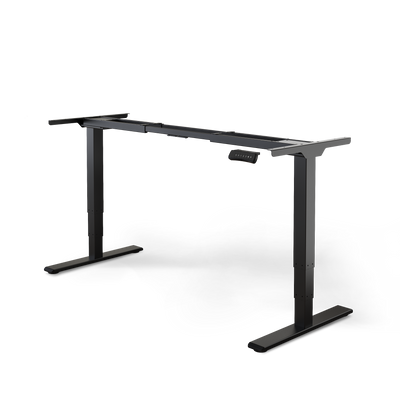
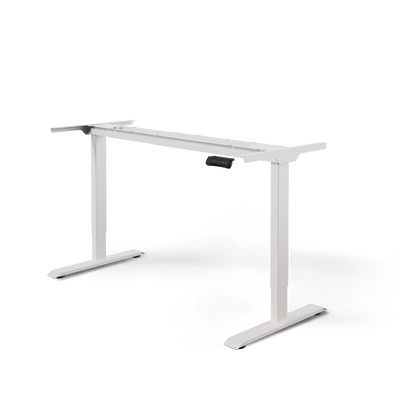
- Height-adjustable desks: They are very valuable. The alternation between sitting and standing promotes circulation and prevents tension. This is one of the most effective individual measures for office workstations.
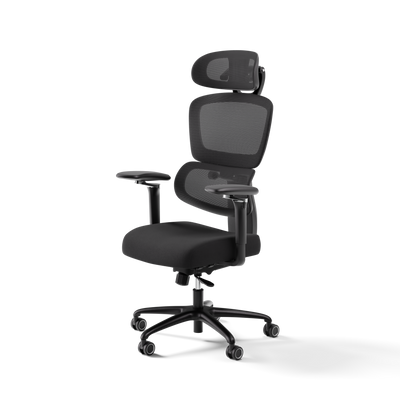
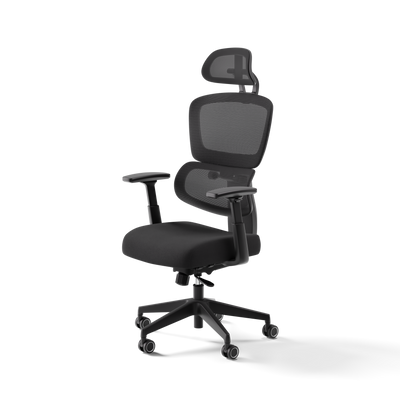
- Ergonomic office chairs: A good chair is a worthwhile investment. It adapts to the body and promotes dynamic sitting.
- Correct screen alignment: Position monitors so that the gaze falls slightly downward. This relaxes the neck. Monitor arms offer maximum flexibility for this.
- Good lighting concept: Glare-free, bright workplaces prevent tired eyes and headaches.
These principles also apply to remote employees. Offer your colleagues in the home office budget solutions for equipment, loan devices, or sound advice on setting up their workspace.
Ergonomics is not an option, but a duty. An ergonomically designed workplace reduces physical discomfort and demonstrably increases concentration and productivity. It is a direct investment in the performance of your team.
Targeted Strengthening of Mental Health
Mental health is increasingly coming into focus. Stress, performance pressure, and constant availability are burdens. Modern OHM must proactively address this and create offers that strengthen mental resilience.
Mental health is at the top of the priority list for health measures in German companies, at 56%.
Practical measures can look like this:
- Workshops and seminars: Offer training on topics such as stress management, resilience, or mindfulness. Employees learn concrete techniques for stressful phases.
- Leadership training: Involve your managers. If they are sensitized to the topic of "Healthy Leadership," they can create a supportive environment.
- External psychological counseling: An anonymous offer, for example via an external hotline, lowers the inhibition threshold. This allows employees to get help quickly in crises.
When planning measures, also consider modern work models. The benefits of flex work should not be underestimated. Flexible working hours or home office can improve work-life balance and reduce stress. Clear rules on unavailability after work are also a strong signal of appreciation. We have compiled additional tips for your mental health at work in our guide.
Offers for Exercise and Nutrition that Resonate
The third pillar, corporate health promotion (CHP), comprises all voluntary offers. The challenge here: What do you offer that is actually used?
Make the offers as low-threshold and practical as possible.
| Measure Area | Concrete Examples of Measures |
|---|---|
| Exercise | - Active break: Short, guided exercise units directly at the desk. - Cooperation with gyms: Discounted memberships make it easier to get started. - Running groups or team challenges: Playful competition motivates and strengthens team spirit. - Bicycle leasing: A good way to integrate more exercise into daily life. |
| Nutrition | - Healthy canteen options: Fresh, balanced meals. - Cooking classes or nutrition lectures: Impart knowledge and inspire healthy eating. - Water and tea stations: Free, healthy drinks as an alternative to sugary soft drinks. |
It is crucial that the measures fit the work reality of your team. A field service employee benefits more from online offers than from a yoga class in the office. For the production team, targeted compensatory exercises are more sensible than a running club.
Also, gather feedback here. A short survey on possible offers helps to choose the right measures from the outset and ensures higher participation rates.
Successfully Communicating Your OHM Program
Even the best measures and cleverest planning are ineffective if your employees are unaware of them or don't understand their purpose. Thoughtful, transparent communication is the decisive success factor if you want to introduce occupational health management. It creates acceptance, motivates participation, and transforms a management initiative into a lived corporate culture.
Good communication builds trust. It shows that OHM is not a control measure, but a genuine offer that puts the health of each individual at its center.
Create a Clear Communication Plan
Before you send the first email, you need a strategy. A communication plan ensures that the right messages reach the right people through the appropriate channels. Spontaneous announcements often lead to confusion.
First, define your core messages. Why are you introducing OHM? What are the concrete goals, and what do employees gain from it? Formulate these messages simply and understandably.
Then, determine which channels you want to use. A mix reaches most people, whether in the office, in production, or in the home office.
- Digital channels: Use your intranet for official announcements and basic information. A regular newsletter keeps everyone informed. A dedicated channel in the team chat is suitable for quick questions and direct exchange.
- Personal formats: Organize a kick-off event, even virtually, to officially introduce OHM. Regular info sessions or a "health consultation hour" create space for dialogue.
- Analog media: The classic bulletin board or a flyer in the coffee break room are often very effective in reaching absolutely everyone.
A good communication plan is like a roadmap. It provides you and your team with security and ensures that the introduction of OHM receives the necessary attention.
Make Your Managers Key Ambassadors
Your managers are the most important multipliers for your OHM. If they don't support the topic, it will be difficult to convince the workforce. They are the link between management and employees and shape the team culture.
Involve your managers actively from an early stage. Explain the strategic importance to them and provide them with the necessary information so they can authentically answer questions from their teams.
Proven methods for this include:
- Exclusive workshops for managers: Here you can deepen the goals of OHM and discuss the role of the manager in its implementation.
- Provide materials: Create a compact guide or a short presentation that your managers can use for team meetings.
- Emphasize role model function: Encourage managers to participate in the offerings themselves. If the team leader joins the running group, it sends a strong signal.
A manager who genuinely supports OHM is the best advertisement.
Properly Planning Budget and External Partners
Good OHM requires financial resources. Budget planning should take place parallel to the measure and communication planning. Clearly define which resources are needed for internal measures and external service providers.
You don't have to develop everything yourself. There are many professional partners who can support you. This is a great help, especially for SMEs without their own OHM experts.
Possible external partners include:
| Partner Type | Possible Services | Advantages |
|---|---|---|
| Statutory Health Insurance Funds | Prevention courses, financial subsidies, advice, analysis tools | Often free or heavily subsidized, extensive experience |
| Specialized OHM Service Providers | Holistic concepts, implementation of measures, evaluation | Professional expertise, relieves internal resources |
| Freelance Trainers/Coaches | Workshops on specific topics (e.g., yoga, resilience, nutrition) | High flexibility, tailored content |
| Health App Providers | Digital offerings for exercise, meditation, or stress management | Low-threshold, ideal for remote teams, highly scalable |
Collaboration with external partners, especially health insurance companies, has proven successful. In 2023, health insurance companies reached a total of 2,187,858 employees in 29,668 companies with their corporate health promotion measures. The results of the GKV prevention report on rehadat-statistik.de show the potential of these collaborations.
An open feedback culture is crucial. From the outset, create simple channels through which employees can provide feedback. This not only shows appreciation but also provides valuable insights for the continuous improvement of your OHM program.
Measuring Success and Sustainably Optimizing OHM
Occupational health management is not a one-time project. After the first measures are launched, the real work begins. To ensure your investment pays off, regular and honest success monitoring is essential.

Only by keeping an eye on the right key figures can you objectively assess what is well received and where you need to make adjustments. This data is your strongest argument for anchoring OHM in the company long-term and securing future budgets.
Selecting the Right Key Performance Indicators (KPIs)
To make the success of your OHM tangible, you need meaningful Key Performance Indicators (KPIs). These must directly contribute to the goals defined at the beginning. The best overview is obtained through a mixture of quantitative ("hard") and qualitative ("soft") data.
Hard key figures are objectively measurable facts:
- Sickness rate: Analyze not only the overall rate but also distinguish between short-term and long-term illnesses. A decrease in short absences can be an indicator of reduced stress.
- Participation rates: How many employees use your offerings? A high rate for the yoga class is a positive signal. A low rate for ergonomics workshops indicates a need for action in communication or offerings.
- Turnover rate: A lower termination rate can indicate higher satisfaction and retention. Good OHM contributes to this.
Soft key figures capture subjective perception:
- Employee satisfaction: Regular, anonymous pulse checks or surveys provide valuable insights. Direct questions about workload or appreciation are illuminating.
- Feedback on measures: Specifically solicit feedback on individual offerings. Was the nutrition lecture helpful? Were the contents of the resilience training practical?
- Improvement of the working atmosphere: Observe cooperation. Is there more open discussion about topics like mental health? This alone is already a success.
OHM is only as good as its ability to adapt. Regular monitoring with the right KPIs turns assumptions into facts and enables data-driven optimization of your strategy.
Analyzing Data and Adjusting Measures
Collecting data is only the first step. The correct interpretation and the derivation of concrete measures are crucial. Regularly meet with your OHM team and analyze the collected information.
Ask yourselves these questions:
- Which measures show the greatest effect in relation to the effort?
- Where are we not reaching our target groups as desired?
- Are there new needs since the last analysis?
Let's say your data shows: the sickness rate has slightly decreased, but participation in on-site sports courses is low. At the same time, a survey reveals that many employees in the home office desire digital offerings.
The logical consequence is a budget reallocation. Reduce the expensive on-site courses and instead invest in licenses for a fitness or meditation app.
Establishing the OHM Cycle
Sustainable health management is a continuous improvement cycle. This cycle ensures that your OHM remains effective and is accepted by everyone.
| Phase | Description | Key Question |
|---|---|---|
| 1. Analysis | Re-evaluation of needs and review of the current situation. | Have the health burdens in the team changed? |
| 2. Planning | Adjustment of goals and measures based on new insights. | What new offerings could close the identified gaps? |
| 3. Implementation | Execution of the optimized or new health offerings. | How do we communicate the changes so that everyone participates? |
| 4. Evaluation | Measurement of effectiveness using defined KPIs. | Have our adjustments led to the desired results? |
You should ideally go through this cycle once a year. This ensures that your occupational health management is always adapted to the current needs of your company and your employees.
The Most Frequent Questions About Implementing OHM
When you plan to establish occupational health management, the same questions often arise. We have collected the most common ones and answer them practically so that you can overcome typical hurdles from the outset.
What does the introduction of OHM cost an SME?
There is no blanket answer. The costs depend on the company size and the measures implemented. Investments can be divided into three areas:
- Personnel costs: The time your OHM team invests in planning, organizing, and communicating. This is often the largest item at the beginning.
- Measure costs: Direct expenses for workshops, ergonomic furniture, licenses for health apps, or subsidies for fitness studios.
- External consulting costs: Costs incurred if you use support from service providers or health insurance companies.
You don't have to finance everything yourself. Health insurance companies often offer free consultations, analyses, and financial subsidies for certified prevention courses. In addition, health promotion is tax-free up to 600 euros per employee per year.
How do I convince skeptical employees?
Resistance or skepticism is normal. Not everyone is immediately enthusiastic. The key to success lies in open communication and genuine participation.
Take concerns seriously. Often, behind this lies the fear of a control measure or a mere token action.
Make it clear from the outset: OHM is a voluntary offer for health promotion, not for performance control. Anonymity in surveys or with sensitive topics like psychological counseling is non-negotiable.
Involve your employees as early as possible. Ask them about their wishes instead of presenting them with a finished program. When employees realize that their opinion counts and the measures offer genuine added value, skepticism often quickly dissipates. Start with straightforward offers that quickly show positive effects.
What legal requirements do I have to observe?
A complete OHM is not legally prescribed, but it touches on some legal areas that you should be aware of:
- Occupational Safety and Health Act (ArbSchG): As an employer, you are obliged to organize work in such a way that dangers to life and health are avoided. This includes risk assessment, which must consider physical and psychological stress.
- Company Integration Management (BEM): If an employee is absent for more than six weeks within a year, you must offer them a BEM. This is stipulated in § 167 (2) SGB IX.
- Data Protection (GDPR): Health data is extremely sensitive. You must ensure that all data collection, for example during employee surveys or the analysis of sickness data, is data protection compliant.
A well-structured OHM not only helps you promote health but also to meet these legal requirements.
A healthy workplace is the foundation for any successful OHM. At DESKSPACE, you'll find TÜV-certified, ergonomic solutions such as height-adjustable desks and chairs that support your team in working healthily and productively. Discover the right products for your company now at https://deskspace.de.


