

Risk Assessment for Office Workstations: Office Safety Explained Concisely

A risk assessment for the office workplace is a systematic analysis. It examines the potential physical and psychological risks employees are exposed to at work. The goal is to identify and evaluate hazards and eliminate them with appropriate measures. This creates a safe and healthy working environment. This assessment is legally required for every employer.
Why risk assessment in the office is more than just a duty

Risk assessment is not annoying paperwork. It is a strategic tool that directly impacts your team's health and productivity. It's about acting proactively, rather than reacting only when back pain or burnout threatens.
By identifying potential risks early, you lay the foundation for a positive working atmosphere. Your team feels safe and valued. The result is fewer sick days and a noticeably higher motivation and satisfaction.
The strategic advantage of a safe workplace
A systematic look at occupational safety pays off in many ways. You not only discover obvious tripping hazards like loose cables but also often underestimated risks.
These include in particular:
- Ergonomic deficiencies: Incorrectly adjusted chairs, desks, or monitors can lead to musculoskeletal disorders.
- Psychological stress: Time pressure, constant availability, or unclear tasks create stress that can lead to long-term illness.
- Unfavorable environmental factors: Poor lighting, noise, or a bad indoor climate impair concentration and energy.
A good risk assessment is the foundation for effective health management. It protects your employees and ensures the long-term performance of your company.
A proactive approach also sends a strong signal to your team. It shows that your employees' health is important to you. This commitment is a crucial factor today in finding and retaining qualified employees. You can read more about this topic in our guide on how to successfully implement corporate health management.
Current developments and need for action
The understanding that a systematic risk assessment for the office workplace is indispensable is gaining ground. Data from the GDA company and employee survey show a positive trend. Between 2015 and 2023/24, the proportion of companies that regularly conduct such assessments rose from 52 percent to 68 percent. Small businesses, in particular, made progress. More on the results of the occupational safety survey can be found on bmas.de.
Nevertheless, about a third of companies still forego a structured analysis. At the same time, psychological stress is increasingly coming into focus. Meanwhile, 65 percent of companies that conduct an assessment also take mental risks seriously. They are treated equally with physical hazards. This shows that modern occupational safety must consider both aspects to create a healthy working environment.
Mastering the office risk assessment process

An effective risk assessment for the office workplace follows a clear plan. It is not about arbitrary problem-finding but about a systematic and comprehensible procedure. Only in this way can you ensure that you do not overlook any risks and that the measures are effective.
The process is divided into several logical phases. Each phase builds on the previous one. From preparation to control, every step is important to create a safe working environment.
Define work areas
Before going into detail, you need to define the framework. Which areas and activities are you considering? An open-plan office has different requirements than a single office, a meeting room, or the reception area.
Create clear units for your assessment. These can be:
- Work areas: For example, "administration," "development department," or "creative area."
- Activity groups: Think of "inside sales employees" or "graphic designers," whose workflows differ.
This delimitation helps you maintain an overview and conduct the analysis in a targeted manner. It is the basis for a clean risk assessment in the office workplace.
Systematically identify hazards
Now the investigation begins. In this phase, you collect all potential sources of danger in the defined areas. Consider both physical and psychological stressors.
A combination of different information sources works best:
- Walk-throughs: Go through the offices and observe the actual workflows. Talk directly to colleagues at their desks.
- Employee surveys: Anonymous questionnaires or moderated workshops provide valuable insights into stresses that are not visible from the outside.
- Data analysis: Review accident statistics, sick leave reports, or reports from the occupational safety specialist. Numbers can provide important clues.
Document everything precisely. Typical examples are dazzling lighting on the screen, drafts from the air conditioning, or unclear responsibilities that create stress.
Evaluate risks and set goals
Not every danger is equally critical. In the next step, you evaluate the relevance of each point. Ask yourself: How likely is an incident? And how severe would the consequences be?
A tip: A simple risk matrix that combines probability of occurrence and severity of damage helps you prioritize. This way, you immediately see where action is needed.
Based on this, you define clear protection goals. A protection goal is a concrete statement of what is to be achieved. Instead of formulating "less back pain," say: "All office workstations are set up in such a way that an ergonomically neutral posture is possible throughout the entire working day." This is measurable.
Derive and implement measures
With the goals in mind, you develop suitable solutions. Stick to the proven TOP principle. It sets a clear order.
- T (Technical measures): Always take precedence. An example is the purchase of height-adjustable desks for dynamic work.
- O (Organizational measures): This involves designing processes. This can be the introduction of fixed break times or the regulation of mobile work.
- P (Personal measures): These are used when T and O are not sufficient. Instruction in ergonomic working techniques would be an example.
Plan the implementation of the measures concretely. Who is responsible? By when should it be completed? What resources are needed?
Control effectiveness and update
A risk assessment for the office workplace is a continuous process. After implementing the measures, you must check whether they were effective. Have the risks been reduced? Have the protection goals been achieved?
Get feedback from employees, conduct another walk-through, or review sick leave statistics after a few months. If a measure does not work, you must adjust it. The results of this control are directly incorporated into the updating of your assessment.
Overview of the phases of risk assessment
This table summarizes the central phases of the process. It shows the core task of each phase and the respective result.
| Phase | Core Task | Result |
|---|---|---|
| 1. Preparation | Define and delimit work areas and activities. | Clearly defined examination units. |
| 2. Identification | Systematic identification of all physical and psychological hazards. | Complete list of potential sources of danger. |
| 3. Evaluation | Risk analysis (probability/severity) and goal setting. | Prioritized risk list and concrete protection goals. |
| 4. Measures | Derivation and planning of technical, organizational, and personal measures. | Implementation plan with responsibilities and deadlines. |
| 5. Implementation | Execution of the planned protective measures in the company. | Realized workplace improvements. |
| 6. Control | Verification of the effectiveness of the implemented measures. | Proof of goal achievement and risk reduction. |
| 7. Documentation | Complete and verifiable documentation of all steps. | Legally compliant document as proof of fulfillment of duty. |
It is crucial to also consider the specific requirements of remote work, as working from home brings new challenges. Documentation is the last but decisive step. It makes the entire process legally secure and traceable.
Properly assessing physical risks in the office workplace

Physical hazards are among the classic risks in the office. They are often not directly visible, but their effects such as tension, headaches, or long-term health problems are noticeable. It's about more than just a comfortable chair.
A thorough assessment of these factors is a central component of your risk assessment for the office workplace. It is a systematic search for ergonomic weaknesses and unfavorable working conditions. The goal is to identify risks before they become problems.
Ergonomics as the core of the assessment
Ergonomics is at the center of the analysis of physical risks. A poorly furnished workplace forces the body into unnatural postures. The result is often musculoskeletal disorders, one of the most common causes of absenteeism in the office.
Start your assessment with the three main components of a VDU workstation.
The office chair is the foundation
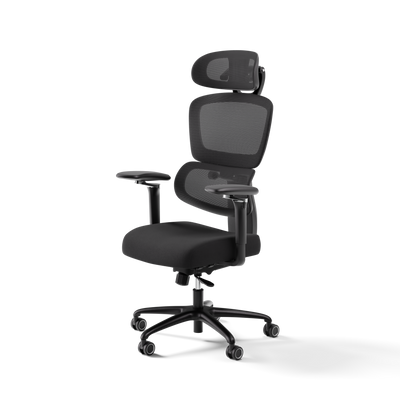
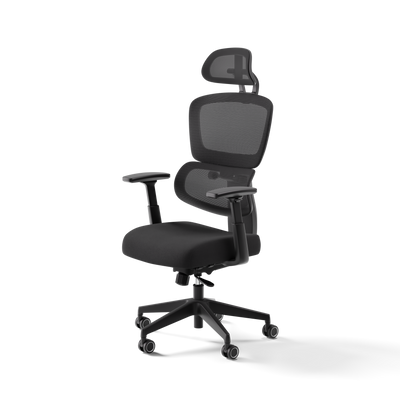
An ergonomic office chair must be individually adjustable to optimally support the body.
- Seat height: Your feet should be flat on the floor, while your knees and hips form an angle of slightly more than 90 degrees.
- Seat depth: Ideally, a flat hand should fit between the back of your knee and the front edge of the seat. This ensures blood circulation in the legs.
- Backrest: A good backrest supports the natural S-shape of the spine. The lumbar support should be at the level of the hip bone.
- Armrests: When properly adjusted, the forearms rest loosely, the shoulders are relaxed, and the upper and lower arms form a right angle.
The desk determines posture
The correct desk height is crucial for a relaxed posture. With a rigid desk, the chair must compensate for the height, which often requires compromises such as a footrest.
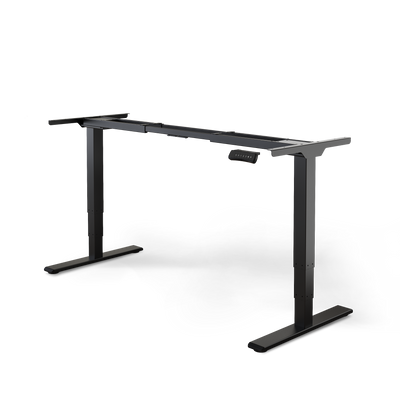
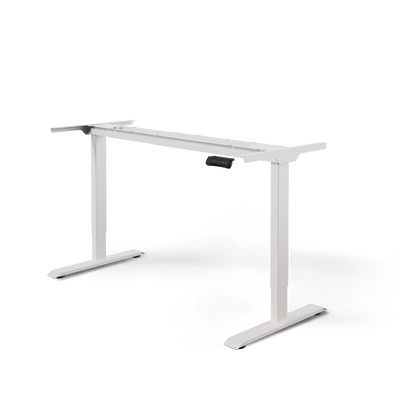
A height-adjustable desk is an effective solution against a lack of movement in the office. It enables regular switching between sitting and standing. It adapts to you and thus actively prevents tension.
The monitor guides the gaze
The position of your monitor has a direct influence on your neck and shoulder muscles. An unfavorable adjustment quickly leads to tension.
- Height: The top line of the screen should be just below your eye level. This way, your gaze is slightly tilted downwards.
- Distance: A viewing distance of between 50 and 80 centimeters is ideal, depending on the screen size.
- Position: Always place the monitor directly in front of you, never to the side, to avoid twisting your head.
Further physical sources of danger
In addition to ergonomics, there are other physical risks in the office. These factors influence concentration, safety, and well-being and belong in your risk assessment for the office workplace.
Lighting and visibility conditions
Poor lighting fatigues the eyes, weakens concentration, and can cause headaches. A healthy mix of daylight and artificial lighting is important.
Pay attention to these points:
- No glare: Place the screen at a 90-degree angle to the window to avoid reflections.
- Sufficient brightness: The illuminance in the direct work area should be at least 500 lux.
- Even illumination: Strong contrasts between bright and dark zones in the room are strenuous for the eyes.
Tripping hazards and cable management
Loose cables on the floor are a common cause of accidents in the office. Good cable management is an important safety aspect.
Use cable conduits or cable trays to safely stow connections. Objects standing around in walkways are also an avoidable hazard.
Indoor climate and noise
A poor indoor climate impairs performance. Air that is too dry irritates the mucous membranes, and drafts can lead to neck tension. A room temperature between 20 and 22 degrees Celsius and regular ventilation are crucial.
Noise is an often underestimated stress factor. Constant background noise disturbs concentration. Check whether partitions or sound-absorbing elements can improve acoustics.
Identifying and addressing psychological stress in everyday office life

In addition to physical risks, psychological stress is increasingly coming into focus in a modern risk assessment for the office workplace. They are invisible, but their effects on health and productivity can be significant. Stress, overwork, or conflicts are among the biggest challenges in the working world.
Systematically identifying these factors is demanding. Psychological risks cannot be measured with a tape measure. A sensitive and structured approach is needed here to record mental stress and develop effective countermeasures.
Typical sources of psychological stress in the office
Psychological stress usually arises from unfavorable working conditions over a long period. To identify these stresses, you need to consider the right areas.
Pay particular attention to these four areas in your analysis:
- Work tasks and content: Are tasks clearly defined? Monotonous activities can be just as stressful as constant overwork.
- Work organization: Constant interruptions, unrealistic deadlines, and high time pressure are classic stressors. Constant availability also contributes to mental exhaustion.
- Social relationships: Conflicts, lack of recognition, or lack of support in the team can lead to considerable pressure.
- Working environment: Constant noise or constant unrest in an open-plan office are physical and psychological stressors. They impair concentration and increase the stress level.
An open and trusting corporate culture is the most important prerequisite for evaluating psychological stress. Employees only give honest feedback if they feel safe.
Methods for systematically recording mental risks
To objectively record psychological hazards, observations are often not enough. You must actively involve your employees in the process.
Proven instruments for this are:
- Employee surveys: Standardized and anonymous questionnaires are an efficient means of obtaining a broad mood picture.
- Moderated workshops: In small groups, stresses can be openly discussed. An external moderator can help guide the conversation.
- Observational interviews: This method combines the observation of workflows with targeted questions. This way, you uncover discrepancies between the described process and reality.
A combination of several methods often provides the most meaningful result. It is important to communicate the results transparently and to work together as a team to find solutions.
Practical measures to reduce psychological stress
Knowing the stress factors is only the first step. What happens next is crucial. Often, small organizational adjustments have a big impact.
Here are some examples of effective measures:
- Clear communication: Ensure that tasks and responsibilities are clearly distributed. Regular team meetings help to avoid misunderstandings.
- Creation of quiet zones: Set up areas for concentrated work. Good acoustic planning, as described in our article on sound insulation for desks, can reduce noise levels and thus stress.
- Establish fixed break times: Foster a culture where breaks are seen and taken as an important part of work.
- Regulate accessibility: Define clear rules for when employees must be reachable and respect the end of the workday as a recovery period.
The relevance of this topic is undeniable. Psychological stress in the office workplace is increasing. Current data show that in 2020, 14 percent of employees already felt severely affected by time pressure. These figures underscore the importance of a careful risk assessment for the office workplace with a focus on mental health. You can read more about the development of stress at the workplace on destatis.de.
Deriving effective protective measures according to the TOP principle
After you have analyzed all hazards in your risk assessment for the office workplace, you develop concrete protective measures. The TOP principle has established itself as the standard for this.
This principle specifies a clear hierarchy: Technical before Organizational before Personal. The approach ensures that you tackle the root causes of a hazard directly.
Technical measures: The foundation for safety
Technical measures always come first. They combat the danger directly at its source. You change the working environment or the work equipment in such a way that a risk does not arise at all or is greatly reduced. Such solutions work independently of the behavior of individual employees.
An example from everyday office life is the fight against ergonomic risks.
- Height-adjustable desks: The purchase of such models is a typical T-measure. It enables switching between sitting and standing and prevents tension.
- Ergonomic office chairs: A good chair that can be individually adjusted ensures a healthy posture.
- Glare-free lighting: Install luminaires with an indirect light component or install glare protection on windows.
- Noise protection in open-plan offices: Acoustic elements or sound-absorbing partitions create a quieter working atmosphere.
Technical solutions are often a good investment in your team's health. They eliminate the problem instead of just mitigating its effects.
Organizational measures: optimizing processes
If technical solutions are not sufficient or feasible, organizational measures are used. This involves optimizing workflows and task distribution to reduce stress. You are thus changing the way work is done.
In practice, this can look different.
- Rotation of activities: A regular change of tasks can prevent one-sided burdens.
- Sensible break regulations: The introduction of fixed short breaks for intensive screen work relieves eyes and body. Five minutes per hour is a proven rule.
- Flexible working models: Flexitime or home office can help to reduce stress peaks.
- Clear responsibilities: When everyone knows their task, it reduces uncertainties and potential for conflict.
Especially in the area of hygiene, organizational measures are crucial. Professional office disinfection and surface disinfection, for example, is an effective measure to minimize infection risks.
Personal measures: the sensible addition
Personal protective measures (P) are at the end of the chain. They directly address the behavior of employees. Their goal is to raise awareness of dangers and enable employees to protect themselves. They are always a supplement to T and O measures, never a substitute.
Typical personal measures in the office are:
- Instructions and training: Show your employees how to correctly adjust their office chair. In our guide, for example, you can find out how to set up your workstation ergonomically.
- Movement offers: Instructions for compensatory exercises at the desk help to relax muscles.
- Stress management training: Seminars teach techniques for dealing with stress and high workloads.
The following table provides practical examples of how the TOP principle can look in everyday office life:
Practical examples of measures according to the TOP principle
This table shows concrete examples of technical, organizational, and personal protective measures for typical hazards in the office workplace.
| Hazard | Technical Measure (T) | Organizational Measure (O) | Personal Measure (P) |
|---|---|---|---|
| Ergonomics/Musculoskeletal strain | Height-adjustable desk, ergonomic office chair | Regular breaks, alternation of sitting and standing activities | Instruction on chair adjustment, compensatory exercises |
| Eye strain from screen | Glare-free monitors, indirect lighting | Limitation of uninterrupted screen time (e.g., 5-min break/hour) | Instruction on viewing distance and eye breaks, eye exercises |
| Noise in open-plan office | Sound-absorbing partitions, acoustic ceilings | Create "quiet zones" for concentrated work | Provision of noise-canceling headphones, raising awareness of volume |
| Psychological stress (Stress) | Software for better task planning | Clear task distribution, flexible working hours, home office options | Stress management seminars, coaching offers |
The measures often interlock and build on each other. The best protection is achieved when all three levels are cleverly combined.
Check effectiveness and keep at it
The implementation of measures is not the end of the risk assessment for the office workplace. The last step is the effectiveness control. You must check whether your measures were successful.
Ask yourself the following questions:
- Are the identified hazards eliminated or at an acceptable level?
- Have we achieved our protection goals?
- Have new problems arisen from our measures?
Get feedback from your employees, conduct another walk-through, or review key figures such as sick leave statistics. If a measure does not bring the desired success, you must adjust it. This cycle of implementing, checking, and adapting makes risk assessment a living tool for continuous improvement.
Frequently asked questions about risk assessment in the office
Here we answer the most important questions about risk assessment for office workplaces. The answers are short, direct, and practical to give you clear guidance. We consider legal aspects, documentation, and responsibilities.
This section aims to eliminate typical ambiguities and make the risk assessment process safer and more efficient.
How often do I have to conduct a risk assessment at the office workplace?
A risk assessment for the office workplace is not a one-time project. You must regularly check whether everything is still in order and whether the protective measures are effective.
There is no rigid legal deadline for repetition. In practice, however, an annual review has proven useful. This keeps occupational safety a living process.
In addition to routine checks, there are occasions when you need to act immediately. In the event of fundamental changes to working conditions, an update is due.
This is the case, for example, when:
- Office premises are redesigned or new work equipment is introduced.
- A work accident has occurred or an occupational disease has been diagnosed.
- New workflows or technologies are established.
- There are new scientific findings, for example on ergonomics.
Who is responsible for conducting the risk assessment?
The overall responsibility always lies legally with the employer. They are obliged to ensure the safety and health of their employees.
However, they can delegate the practical implementation to qualified persons. This task requires specific knowledge and cannot be taken on by everyone.
As a rule, these are:
- Internal occupational safety specialists (Sifa).
- The company doctor.
- External occupational safety service providers.
The commissioned persons must be able to identify and correctly assess hazards in the office workplace. If there is a works council, it must be legally involved in the process.
What content must the documentation contain?
The documentation is a central, legally required part of the risk assessment for the office workplace. It is the official proof of your fulfillment of duty and makes the process transparent.
A fixed form is not prescribed. A clear, tabular presentation has proven effective.
The following points must be included in your documentation:
- The result of the risk assessment: Which hazards were found and how were they classified?
- The defined protective measures: Which concrete steps were decided to minimize the risks?
- The result of the effectiveness test: Were the implemented measures effective?
- Additional information: Note the assessed work area, responsibilities, deadlines, and the priority of the individual points.
Do I also have to create a risk assessment for home office workplaces?
Yes. The Occupational Safety and Health Act applies regardless of the workplace. The employer is responsible for the safety and health of their employees, no matter where they work.
The risk assessment for the office workplace in the home office must be adapted to the special conditions. The focus here is on specific risks.
Typical focal points in the home office are:
- Ergonomics: Are the chair, desk, and monitor suitable for the home workplace?
- Work organization: Are working hours, breaks, and accessibility clearly regulated?
- Psychological stress: How are social isolation and the blurring of professional and private life handled?
Since the employer cannot simply enter the private home, the assessment often takes place differently. A good method is a combination of checklists that the employee fills out themselves, photo documentation, and targeted discussions. The responsibility for adequately instructing employees remains with the employer.
Do you want to actively improve ergonomics in your office or home office? The height-adjustable desks and ergonomic chairs from Deskspace are ideally suited as technical protective measures to reduce physical strain and create a healthy working environment. Discover the right solutions now at https://deskspace.de.


